Every wine starts as the same three things: grapes, yeast, and time. What actually separates a Cabernet Sauvignon from a Pinot Grigio, or a red from a rosé, comes down mostly to which grape went into the tank and what happened to its skin once it got there. This wine grape guide walks through how that works: how grape variety shapes flavor, color, and structure, how many types of wine grapes actually exist, and the specific grapes behind red, white, and rosé.
Quick Guide to Wine Grapes
-
A wine's color starts with skin contact, not the juice. Red wine ferments with dark grape skins in the mix. White wine gets pressed and separated from its skins almost immediately. Rosé sits in between by design.
-
Tannins, the grippy texture in red wine, come from grape skins and seeds. Thicker-skinned grapes like Cabernet Sauvignon and Nebbiolo bring more structure. Thinner-skinned grapes bring less.
-
There are an estimated 10,000 grape varieties on the planet, but only about 1,368 are used to make wine in any commercial quantity, according to Jancis Robinson's reference work on the subject.
-
Just 13 grape varieties cover more than a third of the world's vineyard land, per the International Organisation of Vine and Wine (OIV), with Cabernet Sauvignon as the most planted wine grape on earth.
-
Every Medly wine is built from grapes, native yeast, and minimal sulfites. Nothing else. The grape does all of the work essentially.
How Wine Grapes Actually Shape a Wine
I ran a small vineyard and winery in southwestern Colorado before Medly, and the first thing that changes once you're growing the fruit yourself, not just buying juice, is how much respect you develop for the grape itself. Winemaking technique matters, but it's mostly a set of decisions about how much to get out of the way of what the grape already brought to the tank.
Skin contact decides the color.
Grape juice itself is nearly colorless no matter what color the skin is. Red wine gets its color, and its tannin, from fermenting with dark skins in direct contact with the juice for days or weeks. White wine is pressed and separated from the skins almost immediately, which is why it stays pale even when it's occasionally made from red grapes, as happens in Champagne. Rosé splits the difference, with only a few hours of skin contact instead of a full fermentation. We've gone deeper on exactly how that plays out grape by grape in our breakdown of red wine versus white wine winemaking.
Tannin comes from the skin, not the juice.
Tannins are the drying, grippy sensation you feel on your gums with a big red, and they're a type of phenolic compound concentrated in grape skins and seeds. Thicker-skinned, smaller-berried grapes like Cabernet Sauvignon and Nebbiolo pack in more of these compounds, which is part of why those wines age so well. Grape variety is the single biggest lever here, though vineyard site and winemaking technique both push a tannin profile around at the margins, according to research on the subject from SevenFifty Daily, citing UC Davis' viticulture and enology program.
Sugar becomes alcohol, and how far that goes is a choice.
Every grape arrives at harvest already carrying natural sugar. Yeast eats that sugar during fermentation and converts it into alcohol, and a wine fermented all the way to dry has almost nothing left over. That's the whole reason a wine can taste like ripe fruit and still finish bone dry: fruit flavor and sugar are two different things. We've written more about where that leftover sugar actually goes, and why, in our piece on sugar in red versus white wine.
Place changes what the same grape can do.
Climate, soil, and elevation all shift how a grape ripens, which is why a Syrah from France's Rhône Valley tastes noticeably different from a Shiraz grown in Australia's Barossa Valley, even though it's the same grape. We cover this in more depth region by region in our guides to France's top wine regions and the most famous wine regions in Italy.
And then there's what a producer chooses to add, or not add.
Grapes and yeast get a wine most of the way there on their own. What happens after fermentation, whether a producer fines it, adjusts the acid, or leaves it alone, is its own layer entirely. We keep that list about as short as it gets: grapes, native yeast, and minimal sulfites, which is the same approach behind what actually goes into a bottle or pouch of clean wine versus a more heavily processed one.

How Many Types of Wine Grapes Are There?
More than people expect, and far fewer than that actually matter. Jancis Robinson, Julia Harding, and José Vouillamoz set out to catalog every grape variety making wine anywhere in commercial quantity for their reference book Wine Grapes, and landed on 1,368 out of an estimated 10,000 grape varieties in existence worldwide, according to Jancis Robinson's own account of the project. Most of the rest are table grapes, raisin grapes, rootstock varieties, or grapes still grown only in a single village somewhere.
Of the varieties that do end up in a bottle, a small handful dominate. The OIV, the international body that tracks global vine data, found that just 13 grape varieties cover more than a third of all the vineyard land on earth, with Cabernet Sauvignon alone accounting for around 5 percent of the world's total vine area. That's not because the other 1,300-plus varieties aren't worth growing. It's mostly a function of what growers already had in the ground, what markets recognize by name, and what happened to travel well as vineyards expanded into new countries over the last few centuries.
Wine grape varieties also split into two broad families before you get anywhere near a specific name. Black-skinned grapes are the starting point for red wine and most rosé. Green or yellow-skinned grapes are the starting point for the great majority of white wine, with a few white wines made from black grapes handled gently enough to avoid picking up color. Which family a grape belongs to is the first fact worth knowing about it. What that grape can actually taste like once it's in a glass is where the real variety starts.
Red Wine Grapes
Red wine grapes carry dark, pigmented skins loaded with the compounds that give red wine its color and most of its tannin. A handful of these grapes show up again and again for good reason.
Cabernet Sauvignon is the most planted wine grape in the world, and it earns that spot with structure: full-bodied, high in tannin, and built around dark fruit like blackcurrant and black cherry that ages well for years.
Merlot softens that profile considerably, with rounder tannins and plum, chocolate, and blackberry notes that make it one of the more approachable reds on a shelf.
Pinot Noir goes the other direction entirely: light-bodied, silky, and notoriously difficult to grow well, with red fruit flavors like cherry and cranberry that reward the patience it takes to farm. Syrah, called Shiraz in Australia, brings dark fruit, black pepper, and a savory edge that shifts from restrained in France's Rhône Valley to bold and jammy further south.
Malbec built its modern identity in Argentina's high-altitude Mendoza vineyards, known for deep color, velvety tannins, and ripe blackberry fruit.
Grenache is lighter in color and tannin than most of the grapes on this list, but it's one of the most widely planted red grapes on earth, prized for warm, spicy red fruit and a role as the backbone of countless blends.
Sangiovese is Tuscany's signature grape, behind Chianti and Brunello di Montalcino, with bright acidity and a savory cherry character.
Barbera, Piedmont's everyday red, offers sour cherry fruit and high natural acidity in a package that's easier to drink young than the region's more famous Nebbiolo-based wines.
Our own Italian Red is built on exactly that last grape: a DOC Piemonte Barbera from Piedmont, made from 100% certified organic grapes, with the kind of everyday drinkability that's kept Barbera on Italian dinner tables for generations. We've written a full guide to what makes Barbera worth knowing if you want the grape's full story.
Medly's French Red takes a different approach entirely, blending seven certified organic grapes, Malbec, Cinsault, Grenache Noir, Merlot, Carignan, Syrah, and Cabernet Sauvignon, estate-grown in Corbières-Boutenac in southern France, where each grape contributes something the others don't. For the full breakdown of tannin, body, and food pairing by grape, our complete red wine guide goes deeper than we have room for here.
White Wine Grapes
White wine grapes generally come from green or yellow-skinned fruit with thinner skins and far less of the pigment and phenolic material that give red wine its color and grip.
Sauvignon Blanc is high-acid and unmistakably crisp, with citrus, green apple, and a fresh-cut-grass character that shifts from lean and mineral to riper and more tropical depending on where it's grown.
Pinot Grigio is the lighter, easier-drinking counterpart: clean, dry, and built around pear, apple, and citrus peel rather than aromatics that demand attention.
Chardonnay is the most planted white wine grape on the planet and the most shape-shifting, tasting crisp and appley unoaked or rounder and toastier after time in oak.
Riesling carries some of the highest natural acidity of any white grape, which is what lets it run from bone dry to genuinely sweet without ever tasting flabby, usually with citrus and stone fruit up front.
Moscato, aromatic and often lightly sparkling, leans into peach and orange blossom for a style built purely around fragrance.
Vermentino and Grüner Veltliner both bring a savory, mineral edge that's made them go-to whites for food pairing in Italy and Austria, respectively.
Inzolia, a Sicilian grape with roots on the island that trace back to roughly 800 B.C., brings a bright, slightly mineral character that holds up well against fish and shellfish.
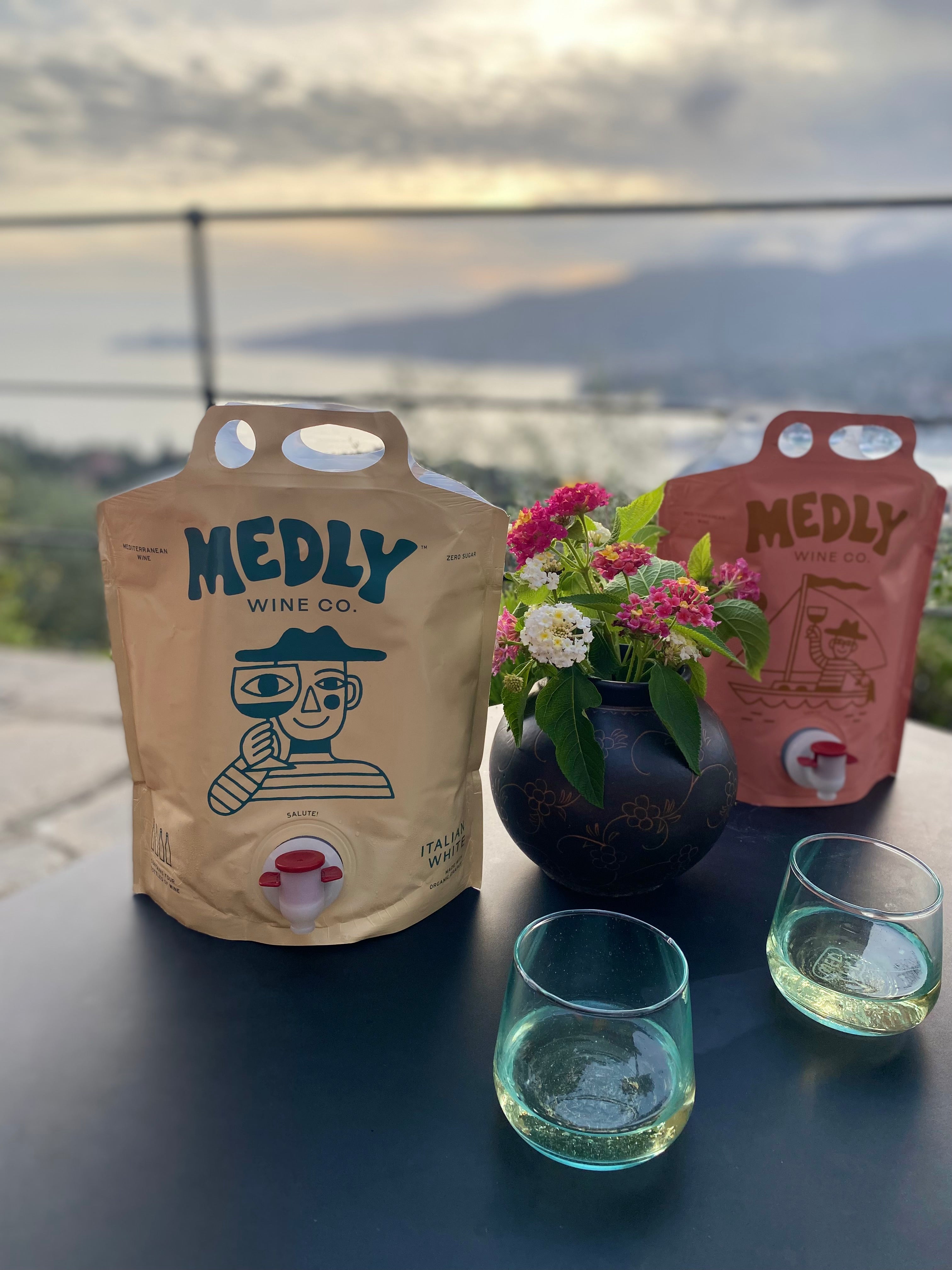
That last grape is one of the two behind Medly's own Italian White, a Pinot Grigio and Inzolia blend grown on certified organic vineyards in Trapani, on Sicily's western tip. For the full rundown on how these and other white grapes differ in body, sweetness, and food pairing, The Essential Guide to White Wine covers the full range.
Rosé Wine Grapes
Rosé almost always starts with the same dark-skinned grapes used for red wine. What changes is how long the juice stays in contact with those skins: a few hours instead of days, which is enough to pick up color and some structure without becoming a full red.
Grenache is rosé's workhorse, especially across southern France and Spain, contributing soft strawberry and watermelon fruit with enough natural sugar potential to keep a rosé feeling round instead of sharp.
Cinsault plays a lighter, more floral supporting role in blends across Provence and the Languedoc.
Syrah and Mourvèdre bring more color and structure when they're part of the mix, which is why the fuller, more structured rosés of Tavel and Bandol lean on both.
Carignan, the backbone grape of Languedoc appellations like Corbières, adds a savory, herbal note that keeps a rosé from tasting one-dimensional. Outside France, the grape list shifts by country: Italian rosato often runs through Sangiovese, and Spanish rosado leans on Tempranillo or Garnacha, Grenache's Spanish name.
Medly's own French Rosé draws on several of these at once, a blend of Merlot, Grenache Noir, Syrah, and Cinsault grown on certified organic vineyards in Corbières, dry and bright rather than sweet. We go much deeper on the three production methods behind rosé's color, and the regional grape differences that follow from them, in The Essential Guide to Rosé Wine.

The Three Ingredients Behind Every Medly Wine
Grapes, native yeast, and minimal sulfites. That's the entire ingredient list on every Medly wine, and once you understand how much work the grape itself is already doing, it's easier to see why we've never felt the need to add anything else. The families we work with in Corbières and Trapani have farmed these same certified organic vineyards for generations, long before "clean" was a label anyone needed to put on a bottle. We go further into why that sourcing decision matters, and how a harvest actually becomes a finished pouch, in Inside the Pouch.
Whichever grape brought you here, red, white, or rosé, the full lineup is worth exploring on its own terms. Browse Medly's wines to see how these grapes actually taste when the fruit is left to speak for itself.