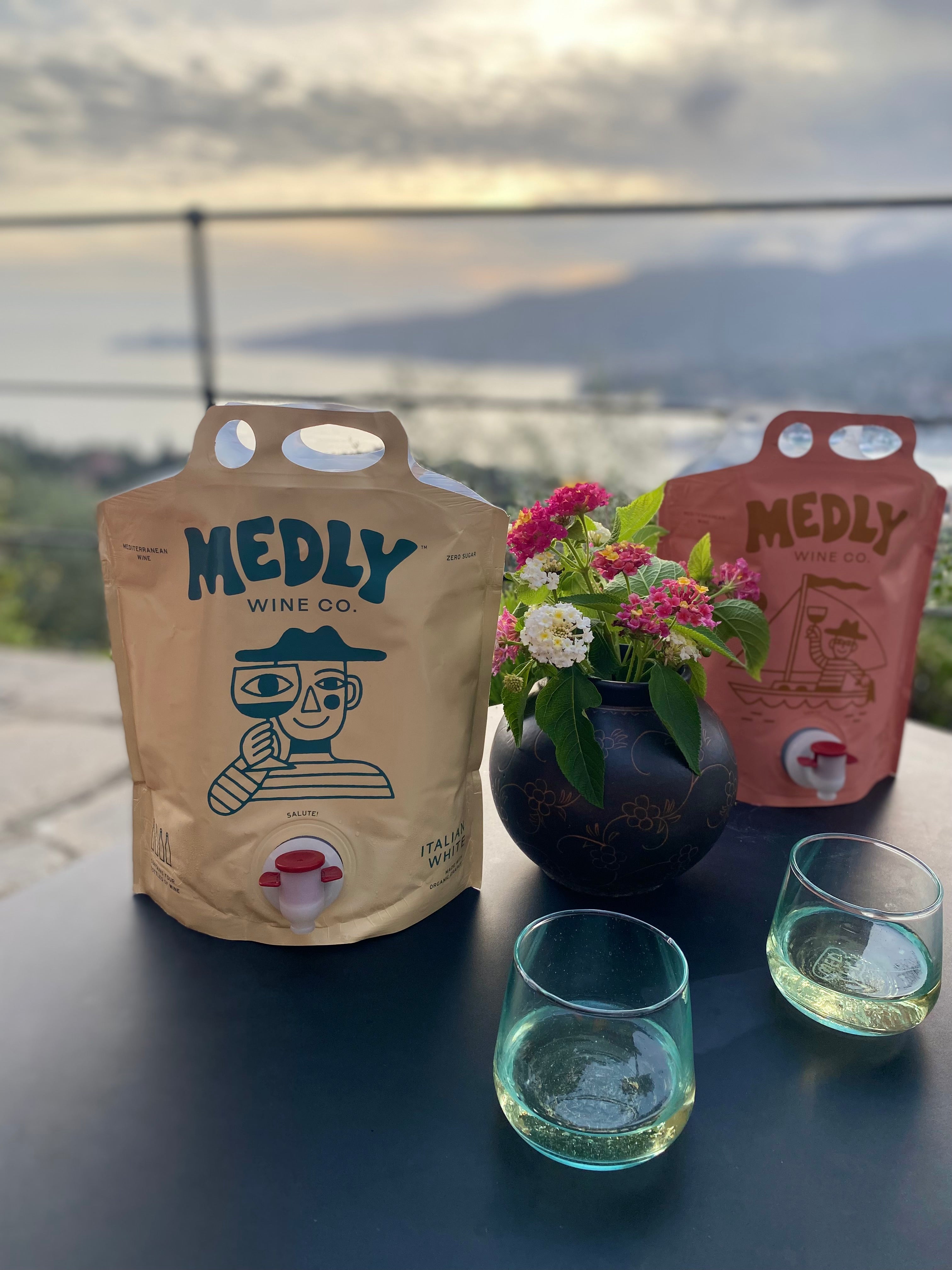
This red wine guide is for anyone who's stood in front of a wine aisle and stared blankly at a wall of dark bottles. Red wine is one of the most rewarding things to learn about, but it doesn't have to feel like homework. The basics are simple: pick the body you want, consider the tannins, match it to your dinner, and pour.
Whether you're just getting started with reds or you've been drinking them for years and want to understand them better, this guide covers what actually matters.
Quick Guide to Red Wine
Red wine is made from dark-skinned grapes that ferment with their skins on. That's where skin contact is responsible for the color, tannins, and a significant portion of the flavor complexity.
Most red wines fall into a few honest style categories. Here's the shortcut version:
-
Tannins are the grip and texture you feel, mostly on your gums and the back of your palate. More tannins mean more structure. Less tannin means a smoother, more approachable wine.
-
The body is weight. Light reds feel closer to a cranberry juice in texture. Full-bodied reds feel more like whole milk: rich, dense, coating.
-
Acidity is the brightness factor. High acidity keeps a red feeling lively and food-friendly. Lower acidity makes for something rounder and plusher.
-
Fruit flavor doesn't mean sweet. A bone-dry Pinot Noir can taste like fresh cherry and still have zero residual sugar.
Two questions cut through most of the confusion: Do you want something lighter or fuller? And do you want something smoother or with more grip? That alone gets you most of the way there.

Popular Red Wines
These are the grapes and wines you'll see again and again, for good reason. Each one teaches you something different about what red wine can do.
Cabernet Sauvignon
Cabernet Sauvignon is the most planted red wine grape in the world, and it's not hard to understand why. It produces a full-bodied, structured wine with dark fruit flavors: blackcurrant, plum, and black cherry, plus firm tannins that age exceptionally well. You'll often notice cedar, earth, and sometimes a hint of bell pepper from the grape's natural pyrazine compounds.
Cab Sauvignon grows well in warm climates: Napa Valley, Bordeaux, Maipo Valley in Chile, and Coonawarra in Australia. The region leaves a fingerprint. Bordeaux tends more mineral and restrained; Napa runs riper and bolder.
Pinot Noir
Pinot Noir is the grape that makes wine lovers talk in hushed tones. It's light-bodied with silky tannins, red fruit flavors like cherry, raspberry, and cranberry, and an earthy complexity that's hard to describe until you taste it. It's also one of the most difficult grapes to grow well, which is part of why it gets so much attention.
Burgundy in France is the spiritual home. Oregon's Willamette Valley and New Zealand's Central Otago produce some of the most interesting expressions outside of France.
Merlot
Merlot is softer than Cab Sauvignon: rounder, less tannic, with plum, chocolate, and blackberry flavors that feel immediate and approachable. It's the red wine a lot of people reach for when they want something food-friendly without too much grip.
In Bordeaux, Merlot is the backbone of the right-bank wines from Pomerol and Saint-Émilion. On its own in warmer regions, it can get plush and fruit-forward.
Syrah / Shiraz
Same grape, two very different personalities. Syrah from the northern Rhône valley in France (Crozes-Hermitage, Saint-Joseph, Hermitage) is savory, peppery, and structured: dark fruit plus smoked meat and olive notes. Shiraz from Australia, especially the Barossa Valley, runs riper, bolder, and jammier.
The name difference isn't arbitrary. It reflects the style the producer is aiming for. Syrah on the label signals a more restrained, European approach. Shiraz signals the bigger, fruit-forward Australian style. Both are worth knowing.
Malbec
Malbec is the grape that Argentina turned into an identity. It produces deep-colored, velvety wines with blackberry, plum, and violet aromas, moderate tannins, and a smooth finish that's easy to love. At higher altitudes in Mendoza, it develops more freshness and complexity. At lower elevations, it goes rounder and plusher.
It's also grown in Cahors in southwest France, where it tends to be more rustic and tannic: a useful comparison if you ever want to see how much place shapes a grape.
Grenache / Garnacha
Grenache is one of the most widely planted red grapes in the world, even if it rarely gets top billing. It's typically lighter in color and lower in tannins, with red fruit flavors: strawberry, raspberry, cherry, and a warm, spicy finish. In Spain, it's called Garnacha. In southern France, it's the backbone of Châteauneuf-du-Pape and a key grape in Côtes du Rhône blends.
Grenache loves heat and low-rainfall conditions, which is why the Mediterranean basin is its home territory.
Barbera
Barbera is one of Italy's most important red grapes, grown widely in Piedmont alongside the more famous Barolo and Barbaresco. It's defined by its natural high acidity, which keeps the wine fresh and food-friendly even as it delivers deep cherry and plum flavors. Unlike many Italian reds, Barbera tends to be relatively low in tannins, which makes it smooth and approachable without any aging wait.
If you want to understand Italian red wine, Barbera is one of the best starting points. For a deeper look, the Barbera wine guide covers where it comes from, how it's made, and what to pour it with.
Red Wine Grape Varieties and Characteristics at a Glance
|
Grape |
Body |
Tannins |
Acidity |
Key Flavors
|
|---|---|---|---|---|
|
Cabernet Sauvignon |
Full |
High |
Medium-high |
Blackcurrant, cedar, plum |
|
Pinot Noir |
Light |
Low |
High |
Cherry, raspberry, earth |
|
Merlot |
Medium-full |
Medium |
Medium |
Plum, chocolate, blackberry |
|
Syrah/Shiraz |
Full |
High |
Medium |
Dark fruit, pepper, smoke |
|
Malbec |
Medium-full |
Medium |
Medium |
Blackberry, violet, plum |
|
Grenache |
Light-medium |
Low |
Medium |
Strawberry, raspberry, spice |
|
Barbera |
Medium |
Low-medium |
High |
Cherry, plum, fresh |
|
Sangiovese |
Medium |
High |
High |
Cherry, herbs, leather |
|
Tempranillo |
Medium-full |
Medium-high |
Medium |
Cherry, tobacco, vanilla |
|
Zinfandel |
Full |
Medium |
Medium |
Blackberry jam, spice, dark fruit |
Red Wine Food Pairing Guide
Red wine is at home with food. The tannins in red wine bind to proteins and fat, which is why a structured Cab feels better with a steak than alone. The pairing logic isn't complicated: match weight, complement or contrast flavor, and consider the sauce as much as the protein.
-
Cabernet Sauvignon loves red meat. Ribeye, lamb chops, beef stew, and aged hard cheeses.
-
Pinot Noir handles lighter fare beautifully: roast chicken, salmon, mushroom pasta, duck, and charcuterie.
-
Merlot works with almost everything: meatballs, burgers, roasted vegetables, and mild cheeses.
-
Syrah/Shiraz is great with bold, smoky flavors: grilled lamb, BBQ ribs, smoked sausage, and strong aged cheese.
-
Malbec is perfect with steak, empanadas, spiced lamb, and black bean dishes.
-
Grenache and Barbera both love tomato-based dishes: pasta, pizza, and ragu, thanks to their acidity and lower tannins.
-
Sangiovese (the Chianti grape) is practically designed for Italian food.
-
Zinfandel handles sweet, smoky BBQ flavors, pizza, and spiced dishes well.
When the dish gets more complex in flavor, go fuller and more structured. When it's lighter and herb-forward, go lighter and brighter. And if there's a rich tomato sauce, reach for a high-acid red: Barbera or Sangiovese will make both the wine and the food taste better.

Red Wine From Lightest to Fullest Body
Body is the weight and mouthfeel of the wine. It's one of the easiest ways to decide what you actually want in your glass.
Light-bodied: Pinot Noir, Gamay (Beaujolais), Grenache, Frappato
Medium-bodied: Merlot, Barbera, Sangiovese, Tempranillo, Dolcetto, Carignan
Full-bodied: Cabernet Sauvignon, Syrah/Shiraz, Malbec, Zinfandel, Nebbiolo, Mourvèdre
If you're new to red wine, light-bodied reds are the most approachable starting point. They tend to be lower in tannins, which means less of that grippy, dry sensation that catches some people off guard. Comparing European and American wine styles can also help you figure out which direction you tend to prefer: old-world restraint or new-world fruit-forward.
Red Wine Tannins: What They Are and Why They Matter
Tannins are phenolic compounds that come from grape skins, seeds, and stems during fermentation, and also from oak barrels if the wine was aged in wood. According to USDA Agricultural Research Service food chemist Jungmin Lee, flavanol polymers in grape skins are the primary building blocks of wine tannins, and they contribute significantly to both the complexity and mouthfeel of red wine. They create that dry, astringent sensation that coats your palate: the same feeling you get from strong tea. High-tannin reds like Cabernet Sauvignon and Nebbiolo can feel quite gripping when young, but soften and integrate with age. Low-tannin reds like Pinot Noir and Barbera feel smooth and accessible almost immediately.
Tannins serve a practical purpose beyond flavor: they're natural preservatives, which is why full-bodied, high-tannin wines tend to age so well. A young Barolo with aggressive tannins is often a wine asking for a decade of patience.
Protein and fat bind to tannins and soften them on your palate, which is exactly why a high-tannin Cab feels brilliant with a fatty steak. Pour the same wine with a light salad, and the tannins can feel harsh. The food isn't wrong; the pairing is.
Popular Red Wine Blends
Some of the world's most celebrated red wines are blends rather than single-variety bottlings. Blending lets winemakers balance what one grape alone can't do: combining Cabernet's structure with Merlot's softness, or Grenache's fruit with Syrah's depth.
Bordeaux-style blends typically feature Cabernet Sauvignon or Merlot as the backbone, with additions of Cabernet Franc, Petit Verdot, and Malbec. Left-bank Bordeaux leans Cab-dominant; right-bank leans Merlot.
Rhône-style blends center on Grenache, Syrah, and Mourvèdre, sometimes called GSM blends. They're common throughout southern France and wherever winemakers draw from French Mediterranean traditions.
Super Tuscans emerged in Italy as winemakers began blending non-traditional grapes like Cabernet Sauvignon into Sangiovese, stepping outside DOC classification rules to make wines they felt were better. Sassicaia and Tignanello are the famous examples.
Red blends are often more approachable than single-variety bottlings because winemakers design them for balance from the start. They're worth exploring if you haven't already.
French Red Wine Regions
France produces some of the world's most iconic red wines, and understanding the regions is more useful than memorizing every appellation.
Bordeaux sits on the Atlantic coast in southwest France. It's the home of Cabernet Sauvignon and Merlot, structured wines built for aging. The left bank (Médoc, Haut-Médoc, Pauillac, Saint-Julien) leans Cab-dominant. The right bank (Saint-Émilion, Pomerol) leans toward Merlot.
Burgundy (Bourgogne) is Pinot Noir country. The Côte de Nuits, with villages like Gevrey-Chambertin, Vosne-Romanée, and Nuits-Saint-Georges, produces some of the most complex and expensive Pinot Noir on earth. Burgundy's wines are intensely terroir-driven: two villages half a mile apart can produce wines that taste nothing alike.
Rhône Valley splits into two distinct sections. The northern Rhône produces single-variety Syrah: structured, peppery, precise. The southern Rhône specializes in blends, with Grenache-based wines like Châteauneuf-du-Pape that are generous and warm.
Languedoc-Roussillon is the largest wine-producing region in France and the largest vineyard area in the world, with a geographic identity. According to SevenFifty Daily, Languedoc is also the leading producer of organically farmed wines in France, accounting for 36 percent of all French organic vineyard land.
The Mediterranean climate and strong winds that blow an average of 200 days a year reduce disease pressure naturally, which is part of why organic farming took hold here before almost anywhere else. The majority of reds are blends of Grenache, Syrah, Mourvèdre, and Carignan: warm, spiced, and shaped by sea air and garrigue. This is the heartland of genuinely Mediterranean wine.
Beaujolais, just south of Burgundy, produces Gamay: the lightest, most playful French red. Beaujolais Nouveau is the famous one, but the cru villages (Fleurie, Morgon, Moulin-à-Vent) produce wines of real depth and age-worthiness.
Other Key Red Wine Regions Around the World
Italy produces red wine across nearly every region of the country, from the Nebbiolo-based giants of Piedmont (Barolo, Barbaresco) to the Sangiovese-based wines of Tuscany (Chianti, Brunello) and Barbera, which is both deeply Italian and deeply approachable. For context on how Italy organizes its wine classifications, the Italian wine classifications guide is worth a read.
Spain centers on Tempranillo, the dominant grape of Rioja and Ribera del Duero, with the structure to age well and a savory character that works brilliantly with food. Garnacha (Grenache) is the other major player.
Argentina built its modern wine identity on Malbec from Mendoza, producing wines at altitude that retain freshness while developing deep color and fruit.
United States, where California is the anchor, with Napa producing world-class Cabernet and Sonoma producing excellent Pinot Noir and Zinfandel. Oregon's Willamette Valley has earned real recognition for Pinot Noir.
New Zealand produces outstanding Pinot Noir from Central Otago, with high-altitude, continental conditions that create a distinctive freshness.
What Shapes Red Wine Style
Same grape, different wine. This happens constantly, and understanding why makes the whole thing click.
Climate
Cooler climates produce grapes with higher natural acidity and lower sugar: wines that feel tighter, more restrained, with red fruit and earthy notes. Warmer climates let grapes ripen more fully, producing wines with darker fruit, lower acidity, and higher alcohol. A cool-climate Pinot Noir from Burgundy and a warm-climate Pinot Noir from California share a grape name and little else.
Winemaking Choices
Fermentation decisions matter. Extended skin contact during fermentation extracts more tannins and deeper color. Cold maceration before fermentation can extract color while keeping tannins lower. Oak aging adds structure, toast, and vanilla notes, and the age of the oak matters. New oak is more intense than neutral oak.
Some winemakers work as minimally as possible: native yeasts, no additions, no fining or filtering. Others intervene to ensure consistency. Both approaches can produce excellent wine.
Terroir
Soil type, elevation, slope aspect, proximity to water: all of it leaves fingerprints. Well-drained, rocky soils stress the vine and concentrate the fruit. Clay retains water and produces rounder, softer wines. Limestone is associated with energy and minerality. This is why serious wine regions protect their appellations so closely.
Place matters. For a deeper look at how the Mediterranean's specific growing conditions shape the wines that come from there, the piece on what makes Medly's wines genuinely Mediterranean is worth reading.
Storing and Serving Red Wine
Temperature
Red wine is typically served between 60 and 68°F, depending on body and style. Light reds like Pinot Noir and Gamay benefit from a slight chill: 20 minutes in the fridge before pouring brings out freshness and aroma. Full-bodied reds are fine at cool room temperature, but "room temperature" in a modern air-conditioned home is already appropriate. A warm kitchen shelf is too hot.
Decanting
Young full-bodied reds, especially those high in tannins, often benefit from decanting. Exposure to oxygen softens tannins and opens up aromas. An hour of decanting can make a wine that feels tight and closed become expressive and generous. Older wines need more care: sediment may have formed and needs to be poured slowly.
How Long Does Red Wine Last After Opening?
Most red wine stays good for two to three days after opening if the bottle is reclosed and kept at cool room temperature or in the fridge. Bigger, more tannic reds sometimes improve slightly on day two after breathing. Lighter reds and older bottles tend to fade faster.
Pouched wine stays fresh considerably longer than an open bottle because the packaging limits oxygen exposure, which is the mechanism behind why open bottles fade in the first place.
Organic Vineyard Red Wine: What It Means and Why It Matters
Organic vineyard red wine starts in the vineyard. Certified organic farming prohibits synthetic pesticides, herbicides, and fertilizers, relying instead on cover crops, compost, and natural predator management. EU organic vineyard wine certification requires that farmers maintain these practices for at least three years before certification, with sulfite levels capped at 100 ppm for red wine compared to up to 350 ppm in conventional commercial production.
I've spent years working directly with the estates that supply our wines, and the difference organic farming makes in the vineyard is visible before it's detectable in the glass. The soil has more life in it. The vines work harder and express the land more clearly. That's not marketing language; it's what you see when you walk those rows.
The result, in the cellar, tends to be a wine that tastes cleaner and more direct. For wine drinkers who read labels on everything else they consume, applying the same attention to wine is a natural extension. The clean wines vs. conventional wines comparison goes deeper into what's actually in wine and why the production method matters.

What Type of Red Wine Is Best? We Say It's Medly
The best red wine is the one you keep opening. The one that fits your weeknight, travels to a picnic without drama, and doesn't require an explanation when you hand someone a glass.
Medly approaches red wine from a Mediterranean perspective. The wines come from multi-generational family estates in France and Italy, farmed organically, made with minimal intervention, and packaged to stay fresh for up to 45 days after opening. No pretense. No mystery about what's inside. If you want to understand where our wines come from and why it matters to us, the story behind every Medly pouch covers it.
Medly's French Organic Vineyard Red is a Grenache-forward blend from the Languedoc-Roussillon region of southern France: the heartland of Mediterranean red wine. It's made from grapes grown in certified organic vineyards, with the warm, ripe red fruit, smooth texture, and easy balance that comes from that landscape. Explore the Medly French Red.
Medly's Barbera is sourced from Piedmont, Italy: one of the most historically significant red wine regions in the world. It brings the high natural acidity and cherry-forward freshness that Barbera is built for, in the same eco-friendly pouch, ready to pour over pasta or a simple plate of charcuterie. Shop the Medly Barbera.
Both wines reflect the same philosophy: great wine from honest farming, without the markup or the mystification. Browse the full Medly wine collection.
Red Wine FAQs
What is the difference between light and full-bodied red wine?
The body describes the weight and texture of a wine in your mouth. Light-bodied reds like Pinot Noir and Gamay feel closer to skim milk: fresh, bright, lower in tannins. Full-bodied reds like Cabernet Sauvignon and Syrah feel denser, with more tannin, more alcohol, and more weight. Body is partly about the grape and partly about where it was grown and how it was made.
What are tannins in red wine?
Tannins are naturally occurring compounds that come from grape skins, seeds, and stems during fermentation. They create a dry, slightly grippy sensation on the palate: the same feeling you get from strong tea. High-tannin reds age particularly well because tannins act as preservatives. They also bind to protein and fat, which is why tannic reds pair so naturally with red meat and aged cheese.
What is the difference between Syrah and Shiraz?
Same grape, different names and different styles. Syrah is the French name used in the northern Rhône valley and by producers aiming for a more restrained, savory style: dark fruit, black pepper, olive, and structured tannins. Shiraz is the Australian name, typically associated with a riper, fruitier, more full-bodied expression. The name on the label usually signals which style to expect.
What are the main French red wine regions?
The most important French red wine regions are Bordeaux (Cabernet Sauvignon and Merlot), Burgundy (Pinot Noir), the Rhône Valley (Syrah in the north; Grenache-based blends in the south), Languedoc-Roussillon (the largest wine-producing area in France, known for Grenache, Syrah, Carignan, and Mourvèdre blends), and Beaujolais (Gamay).
Is red wine keto-friendly?
Dry red wine has very low residual sugar and is generally compatible with a keto or low-carb lifestyle in moderate quantities. Dry reds like Cabernet Sauvignon, Pinot Noir, and Merlot typically contain less than 1g of residual sugar per 5-oz glass. Looking for wines with transparent labeling helps with verification. Medly publishes its ingredients and nutritional information clearly. See the Medly facts page for details.
What red wine is best for beginners?
Light-bodied, low-tannin reds are the most accessible starting point. Pinot Noir is the classic first recommendation: smooth, aromatic, and food-friendly. Barbera is another great entry point for its freshness and lower tannins. Merlot works for anyone who wants something round and immediately approachable without a learning curve. If you want to explore other styles from there, the essential guide to white wine gives a useful frame of reference for comparing white and red styles side by side.