Pinot Grigio might be the most poured white wine at the table and the least explained. Most people know they like it before they know much else: is it sweet or dry, how much alcohol is actually in the glass, how many calories you're signing up for, whether the sugar count is something to think about. Those are fair questions, and they don't have complicated answers.
Below is the quick version first, then the fuller picture: flavor, food pairings, and where our own Pinot Grigio and Inzolia blend fits into all of it.
Pinot Grigio at a Glance
-
Sweetness: Dry, not sweet. International standards cap dry wine at 4 grams of residual sugar per liter (or 9 grams when acidity matches), and most Pinot Grigio lands well under that.
-
Calories: About 120 to 125 calories in a standard 5-ounce glass, according to USDA nutrition data, with almost all of it coming from alcohol rather than sugar.
-
Alcohol: Usually 11.5% to 13.5% ABV. Italian-style bottles tend to sit at 12% to 13%.
-
Sugar: Typically 1 to 3 grams of residual sugar per liter, which works out to roughly 1 to 2 grams in a 5-ounce pour.
-
Flavor: Light-bodied and crisp, with green apple, pear, and citrus peel, occasionally a faint almond or mineral note.
-
Serving: Best poured cold, 45°F to 50°F, in a smaller white wine glass that keeps the aromatics from fading too fast.
Is Pinot Grigio Sweet or Dry?
Pinot Grigio is a dry wine. Fermentation is what decides this: yeast eats the natural sugar in the grape juice and converts nearly all of it into alcohol, and a wine fermented all the way through has very little sugar left to taste. The International Organisation of Vine and Wine sets the dry threshold at a maximum of 4 grams of residual sugar per liter, or up to 9 grams when the wine's acidity offsets it, and most Pinot Grigio comes in well under that line.
There's regional variation worth knowing. Italian-style Pinot Grigio, the kind grown across Veneto, Friuli, and Sicily, tends to ferment driest and crispest. Cross into Alsace, France, and the same grape is usually labeled Pinot Gris instead, picked riper and given more time on the vine, which can produce a rounder wine with more perceived sweetness. Even then, it's the fruit intensity doing the talking, not a meaningfully higher sugar count. Both styles are dry by the numbers in nearly every case.
So how much sugar in Pinot Grigio actually reaches the glass? Most dry Pinot Grigio carries somewhere between 1 and 3 grams of residual sugar per liter. Poured into a standard 5-ounce glass, that comes out to roughly 1 to 2 grams, less than half a teaspoon. We've gone deeper on how residual sugar works across red and white styles in Sugar in Wine Explained: Red vs. White.
Our own Italian White, a Pinot Grigio and Inzolia blend, takes this a step further. It's fermented completely to dryness, so there's zero added sugar and next to nothing left over once fermentation finishes. That's a composition choice, not a health claim, and we walk through the mechanics of it in Does Sugar-Free Wine Really Exist?

How Many Calories Are in a Glass of Pinot Grigio?
A standard 5-ounce glass of Pinot Grigio runs about 120 to 125 calories, per USDA FoodData Central nutrition data on Pinot Gris (Grigio) wine.
Almost all of that comes from alcohol, not sugar. Alcohol carries about 7 calories per gram, versus roughly 4 calories per gram for carbohydrates, so in a dry wine like Pinot Grigio, the calorie count tracks the alcohol percentage more closely than it tracks sweetness. A bottle at 13.5% ABV runs a little higher in calories than one at 11.5%, even though both are equally dry.
Our Italian White lists 100 to 120 calories per 5-ounce serving on its own nutrition facts, in the same range as Pinot Grigio generally, alongside zero grams of sugar and zero grams of fat. You can see the full serving facts on the product page.
That combination, low carbohydrate and zero added sugar, is a big part of why Pinot Grigio shows up so often on keto and low-carb wine lists. We cover that angle in more detail in Keto Friendly Wines That Fit Your Low-Sugar Diet.
What Is the Alcohol Content in Pinot Grigio?
Most Pinot Grigio falls between 11.5% and 13.5% ABV, with 12% to 13% the most common range for the Italian style. Cross the border into Alsace, where the same grape often goes by Pinot Gris, and alcohol can climb a point or two higher, sometimes 13.5% to 14.5%, from riper grapes and a longer hang time on the vine.
Worth knowing before you compare bottles: the alcohol percentage in Pinot Grigio printed on a U.S. label isn't guaranteed to be exact. Federal rules from the Alcohol and Tobacco Tax and Trade Bureau allow a tolerance of plus or minus 1.5 percentage points for any wine under 14% ABV. A label that reads 12% could legally contain anywhere from 10.5% to 13.5% alcohol. It's a small detail, but it explains why two bottles labeled the same percentage can taste like they're carrying different amounts of alcohol.
Our Italian White sits at 12% ABV, right in the middle of the typical Pinot Grigio range.
What Does Pinot Grigio Taste Like?
Pinot Grigio's flavor profile is light-bodied, crisp, and high in acidity, with green apple, pear, and citrus peel doing most of the work. Depending on where it's grown, you'll sometimes pick up a faint almond note or a slight mineral edge, especially in cooler, coastal sites. Italian-style Pinot Grigio tends to stay leanest and most citrus-forward. The Alsatian Pinot Gris style, grown riper, can lean into stone fruit, like peach or apricot, with a fuller, more textured mouthfeel.
In more than a decade running fine-dining rooms before Medly, Pinot Grigio was the wine I reached for whenever a table wanted something to open the meal without overthinking it. It doesn't compete with what comes next, and it rarely disappoints anyone at a mixed table.
Serving temperature changes how much of that flavor actually shows up. Pinot Grigio is at its best between 45°F and 50°F, cold enough to keep the acidity bright without burying the aroma the way a straight-from-the-freezer pour would. We cover chilling times, storage, and decanting in full in Serve Your White Wine Right for Every Occasion.
What Food (and Occasions) Pinot Grigio Pairs Best With
Pinot Grigio's acidity and light body make it one of the more food-flexible whites on the shelf.
Seafood and shellfish are the classic match. The bright acidity cuts through delicate fish and shellfish without overwhelming them, which is exactly why it shows up so often alongside shrimp, white fish, and light seafood pasta. We break down more pairings in What Wine To Pair With Seafood.
Light chicken and fresh pasta work just as well, especially anything finished with olive oil, lemon, or herbs rather than a heavy cream sauce. A simple green salad or a plate of antipasti with soft cheese also plays nicely against the wine's citrus notes.
For occasions, Pinot Grigio earns its keep at the moments that don't call for a production. It's a natural for brunch, where its acidity holds up against eggs and citrus better than most reds or fuller whites; see Brunch, But Better: Wine Pairings for Your Midday Favorites for the full lineup. It's also a go-to for warm-weather sipping on a patio or by the pool, where a chilled, low-fuss white beats almost anything else in the glass; we round up more warm-weather picks in The Best Wines for Summer Days Outside. And it works as a simple aperitivo before dinner starts, poured on its own with nothing more than a bowl of olives or nuts nearby.
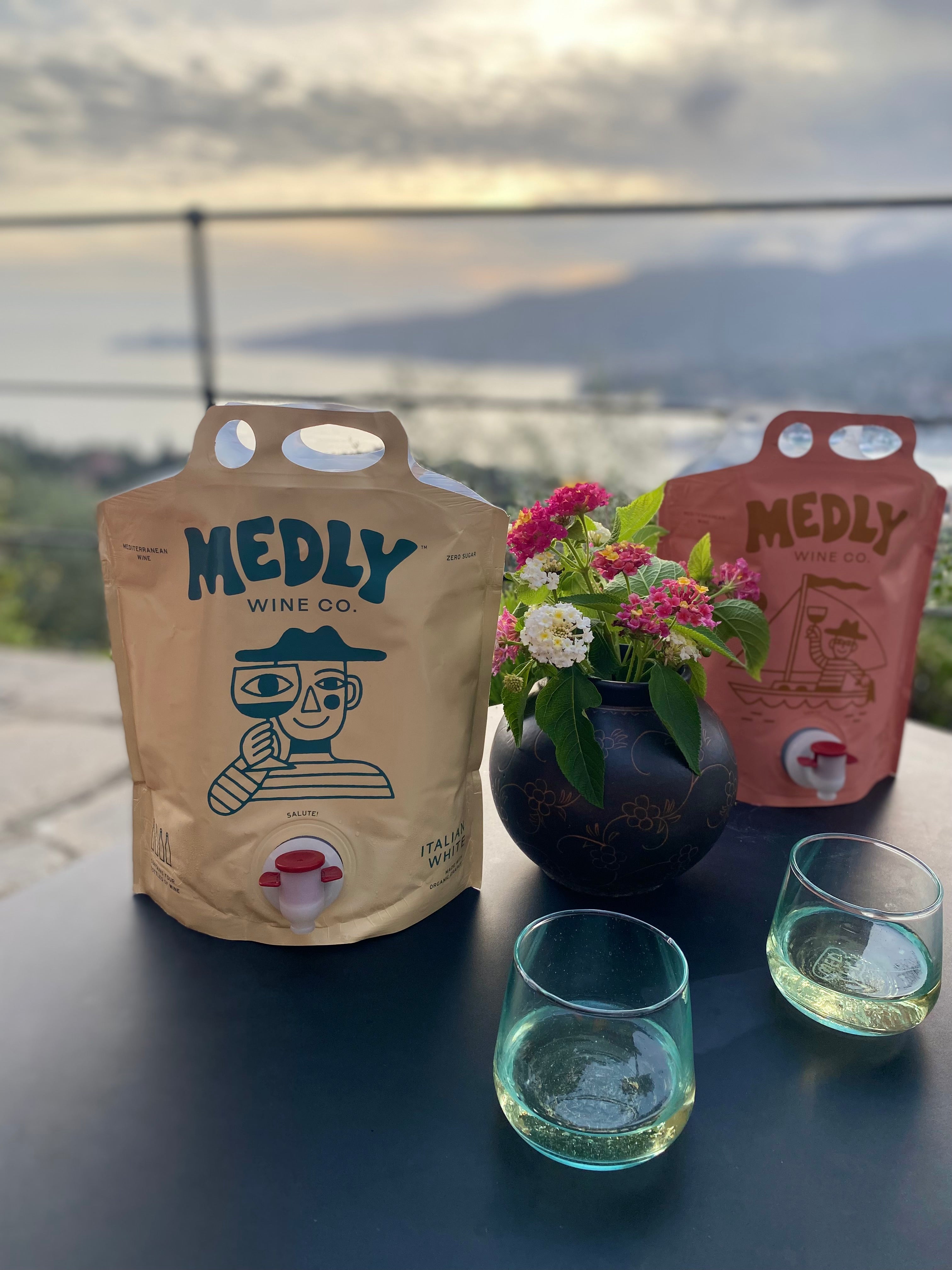
Our Pinot Grigio and Inzolia Blend: The Italian White
Our Italian White is grown in certified organic vineyards on the western tip of Sicily, near Trapani, where the estate blends Pinot Grigio with Inzolia, a grape native to the island that dates back to roughly 800 B.C. We go deeper on how that blend fits into the wider Sicilian wine picture in 5 Most Famous Wine Regions in Italy.
The composition is simple: 100% organic grapes, yeast, and minimal sulfites, fermented at 12% ABV with zero added sugar. Every pouch equals four standard 750ml bottles and stays fresh for up to 45 days after opening, since the pouch collapses as you pour instead of letting air back in; we get into why that matters for freshness in How Long Does Wine Last? Bottles vs Pouches.
If the flavor profile and numbers above sound like your kind of glass, you can find the full serving facts and ingredients for our Italian White here, or browse the full wine collection to see how it stacks up next to our red and rosé.

FAQs About Pinot Grigio
Is Pinot Grigio sweet or dry?
Pinot Grigio is dry. It's fermented until nearly all of the grape's natural sugar converts to alcohol, leaving very little residual sugar behind, typically under the international threshold for a dry wine.
How many calories are in a glass of Pinot Grigio?
A standard 5-ounce glass runs about 120 to 125 calories, according to USDA nutrition data, with most of that coming from alcohol rather than sugar or carbs.
What is the alcohol content in Pinot Grigio?
Most Pinot Grigio falls between 11.5% and 13.5% ABV, with 12% to 13% most common for the Italian style. Federal labeling rules allow a tolerance of up to 1.5 percentage points on any bottle under 14% ABV.
Does Pinot Grigio have sugar in it?
Yes, but very little. Dry Pinot Grigio typically carries 1 to 3 grams of residual sugar per liter, which comes out to roughly 1 to 2 grams in a 5-ounce glass.
Is Pinot Grigio keto friendly?
Its low carbohydrate count and lack of added sugar are why it shows up often on keto and low-carb wine lists. Our own Italian White carries zero grams of added sugar per the product's nutrition facts.
What food pairs best with Pinot Grigio?
Seafood, shellfish, light chicken, fresh pasta with olive oil or lemon, and soft cheeses all pair well, thanks to the wine's bright acidity and light body.
Does Medly sell a Pinot Grigio? Which one is it?
Yes. Our Italian White is a Pinot Grigio and Inzolia blend, grown in certified organic vineyards on the western tip of Sicily. It's fermented at 12% ABV with zero added sugar, and every pouch equals four standard 750ml bottles. You can see the full serving facts and ingredients on the product page.