Every grape that comes off the vine carries sugar. That's not a flaw in winemaking; it's the whole point. Without sugar, there's no fermentation, and without fermentation, there's no wine. But the question most people actually want answered isn't whether sugar exists in grapes. It's whether it ends up in their glass, and if so, how much.
The short answer: it depends almost entirely on how far fermentation is allowed to go.
Where Sugar in Wine Actually Comes From
Grapes contain two natural sugars: glucose and fructose. By the time grapes reach harvest, those sugars can reach between 180 and 250 grams per kilogram of fruit, according to wine chemistry research published by Waterhouse, Sacks, and Jeffry (2016). That's a significant amount of sweetness before a winemaker does anything at all.
When fermentation begins, yeast consumes those sugars and converts them into alcohol and carbon dioxide. A wine that ferments all the way through, until the yeast runs out of food, ends up bone dry with very little sugar left over. What remains is called residual sugar, and it's the number that actually matters when you're trying to figure out how much sugar is in your glass.
Dry wines, whether red or white, typically have between 1 and 3 grams of residual sugar per liter. A standard 5-ounce pour works out to roughly 0.1 to 0.4 grams of sugar per glass, less than you'd find in a stick of gum.
Sweeter wines are a different story. Late-harvest wines and dessert styles can carry over 200 grams per liter. Fortified wines like Port can hit 150 grams per liter. These are wines designed to be sweet, and the sugar levels reflect that intentional choice.
What Adds Sugar to Wine Beyond the Grape
Not all of the sugar in wine comes from the fruit itself. Two common practices can change what ends up in the bottle.
Chaptalization is the addition of sugar to grape juice before fermentation begins. The goal is to increase the potential alcohol, not to sweeten the finished wine. Even so, it's an addition of sugar to the production process. It's common in cooler wine regions like parts of Burgundy and Germany, where grapes don't always ripen fully. It's banned in warmer regions like California, Italy, and Spain.
Back-sweetening works differently and more directly affects what you taste. Some producers add grape concentrate or reserved unfermented juice after fermentation to soften the wine and make it drink a little rounder and fruitier. This practice is common in mass-market wines and in certain off-dry styles, and it's exactly what label-readers are searching for when they scan ingredients. The EU now requires ingredient labeling on wine, which should bring more transparency to this practice. US regulations still lag behind.
If you're tracking what's in your glass, both practices matter. A wine can technically use "no added sugar" language and still carry residual sweetness from grape concentrate. That's why the fermentation method, not just marketing language, tells you the real story.
How Much Sugar Is in a Glass of Red Wine?
Most dry red wines contain somewhere between 0.1 and 0.9 grams of sugar per standard 5-ounce glass, and many quality producers land closer to 0.2 to 0.4 grams. A Cabernet Sauvignon, Sangiovese, or Malbec from a producer fermenting to dryness is going to be on the low end of that range.
The styles that push higher are the ones built for mass appeal: soft, jammy reds that get back-sweetened after fermentation to hit a commercial sweetness target. These wines rarely advertise what they've done, which makes label-checking difficult. In our complete guide to red wine, we go deeper into red wine styles and what distinguishes them by region and production method.
Red wines fermented with skin contact also develop more tannin, which influences how you perceive sweetness. More tannin tends to make a wine feel drier, even if the actual sugar level is comparable to a white.
How Much Sugar Is in a Glass of White Wine?
White wines can run a wider range than reds, which is where the reputation for being sweeter comes from. A bone-dry Pinot Grigio or Sauvignon Blanc is going to land in the same low range as a dry red, well under 1 gram per glass. An off-dry Riesling or Vouvray might carry 3 to 5 grams per glass. A Moscato can push well into double digits.
The variable is fermentation control. White wine fermentations are often stopped earlier than reds, leaving more residual sugar intentionally. Winemakers do this to balance acidity or to match a particular flavor profile. The result is a wine that tastes brighter and fruitier than a red, even at similar actual sugar levels, partly because whites don't have tannins softening the perception.
Our essential guide to white wine covers the major grape varieties and styles in detail, including which tend to ferment drier.

Does Red or White Wine Have More Sugar?
Neither category is automatically higher in sugar. The style and the producer matter far more than the color.
A sweet Riesling will have far more sugar than a dry Cabernet. A back-sweetened commercial red will have more sugar than a crisp, fully fermented white. What drives sugar content is how completely the fermentation ran and whether anything was added afterward, not whether the grapes had dark or light skins.
That said, some general patterns hold. Many popular white wine styles are made off-dry by design, and entry-level white wines sold at mass retail often contain more residual sugar than their labels suggest. If you're looking specifically for low-sugar options, focus on the word "dry" and look for producers who publish their technical data. A wine with residual sugar under 3 grams per liter will drink bone-dry regardless of color.
For context on how the keto community approaches this, our keto wine guide walks through how to identify wines that actually fit a low-carb lifestyle, with specific numbers per pour.
What "Dry Wine" Actually Means for Sugar
The word "dry" refers to fermentation, not taste. A dry wine is one where nearly all the grape sugar has been converted to alcohol. The threshold recognized in most wine markets is under 4 grams per liter of residual sugar, though truly dry wines often come in under 2 grams per liter.
Dry wines can still taste fruity. That's the character of the grape variety itself, not sweetness. A Viognier or Gewurztraminer might smell almost honeyed and still be technically dry. A lean, high-acid Chablis might taste austere and sit at the same gram count.
This is the disconnect that catches a lot of wine drinkers. Dry does not mean low quality or austere; it just means the yeast did its job. For a closer look at how fermentation determines what ends up in the wine, our post on how organic vineyard wine is made covers the process from vineyard to bottle.
Why Sugar in Wine Often Goes Unlabeled
In the US, wine producers are not required to list nutritional information or residual sugar content on labels. This is a meaningful gap for anyone watching sugar intake. A bottle can look identical on the outside, whether it contains 1 gram per liter or 12 grams per liter of residual sugar.
Some producers include tech sheets on their websites with exact numbers. Bigger commercial producers rarely do, partly because those numbers might not be flattering. If you want certainty about what's in your glass, choosing producers who lead with ingredient transparency is the most reliable path. This is one of the core arguments explored in our piece on what ingredients are really in a glass of wine. The US regulatory gap on wine labeling is wide, and most drinkers have no idea.
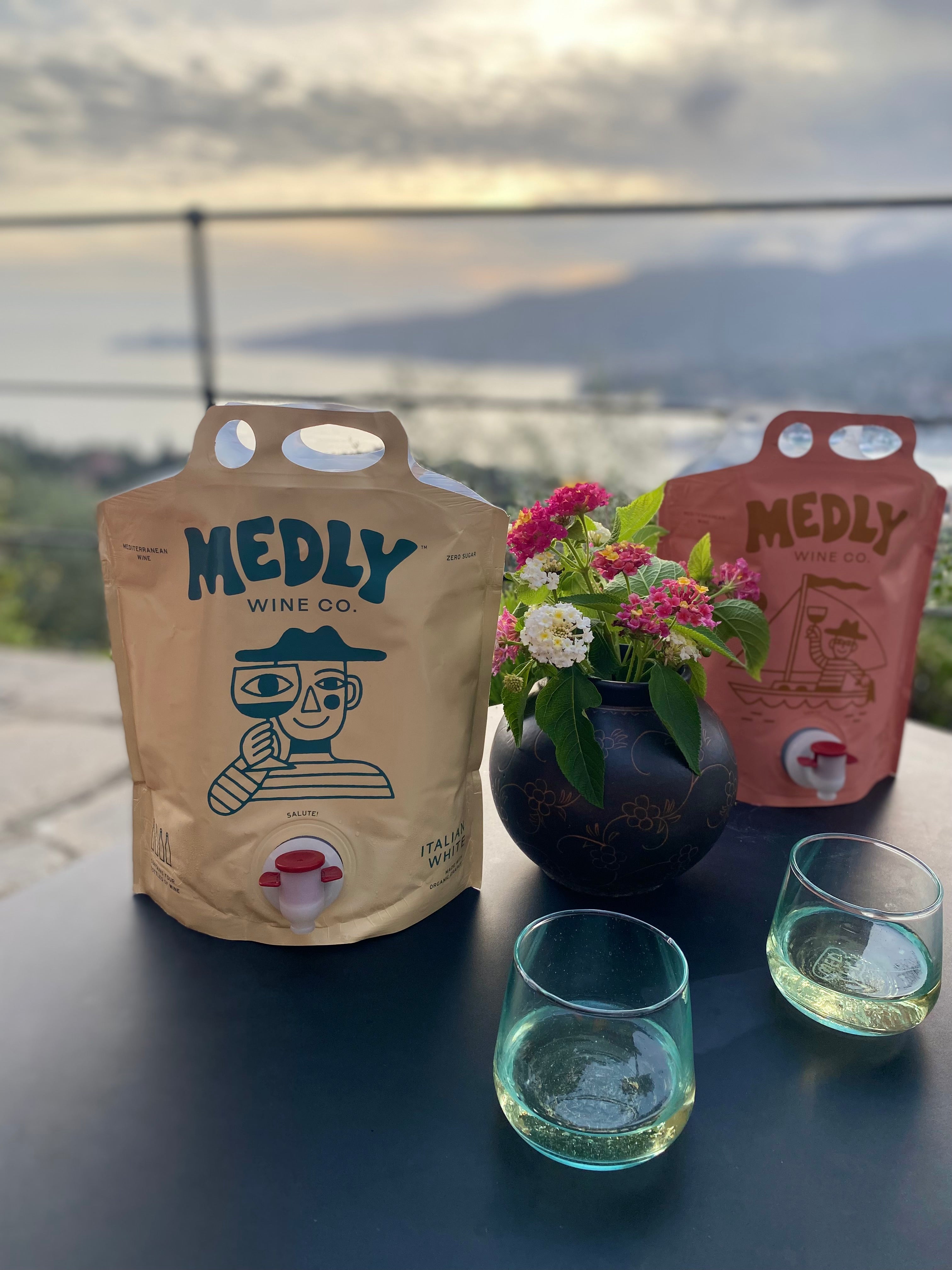
Medly Wine Is Sugar Free, and Here's Why
All Medly wines ferment until the yeast has consumed all available grape sugar. That's not a marketing claim; it's a function of how the wine is made. Fermentation runs to completion, which means there's no residual sugar left in the wine when it goes into the pouch.
This is different from wines that stop fermentation early to preserve sweetness, or wines that get back-sweetened with grape concentrate after the fact. Medly uses three ingredients: organic grapes, native yeast, and minimal sulfites. The yeast does what yeast does, the fermentation finishes, and the result is a wine with zero residual sugar.
Every Medly wine, including the red, white, and rosé, hits that zero-sugar mark. It's one of the things that makes Medly a real option for people watching carbohydrate intake, not just a wine brand using wellness language. For anyone who has spent time sorting through the "does sugar-free wine really exist" question, our deep dive on that topic explains exactly what the zero-sugar claim means and how to verify it.
If you want a wine that tastes clean because it actually is, no back-sweetening, no hidden concentrate, no mystery grams per glass, explore the Medly collection.

Frequently Asked Questions About Sugar in Wine
Does red or white wine have more sugar?
Neither is automatically higher in sugar. What matters is whether the wine fermented to dryness and whether sugar was added afterward. A dry red and a dry white will have similar low sugar levels. A sweet white or a back-sweetened commercial red can have significantly more.
How much sugar is in a glass of red wine?
A 5-ounce pour of a dry red wine typically contains between 0.1 and 0.9 grams of sugar. Dry, quality reds from a producer who doesn't back-sweeten generally land well under 0.5 grams per glass.
How much sugar is in a glass of white wine?
Dry white wines contain roughly the same amount as dry reds, under 1 gram per glass. Off-dry whites like certain Rieslings can contain 3 to 5 grams per glass. Dessert-style whites can be significantly higher.
What is residual sugar in wine?
Residual sugar is what's left after fermentation. Grapes start with natural glucose and fructose. Yeast converts most of it to alcohol during fermentation, and whatever the yeast doesn't consume stays in the wine.
Is dry wine low in sugar?
Yes. A dry wine ferments until very little sugar remains, usually under 4 grams per liter and often under 2 grams per liter. Per glass, that works out to under 1 gram in most cases.
Can wine be truly sugar-free?
Yes, in practical terms. US labeling rules allow a "sugar-free" or "zero sugar" claim on beverages containing less than 0.5 grams per serving. Wines that ferment completely, like Medly, reach that threshold naturally without any additives.
Why isn't sugar listed on wine bottles?
US regulations don't require nutritional labeling on wine, including sugar content. The EU introduced mandatory ingredient labeling for wine in 2023. Until the US catches up, producers that voluntarily publish their numbers or lead with ingredient transparency are the most reliable option for shoppers watching sugar intake.