Italy produces wine in all 20 of its regions. Every single one. That fact alone explains why Italian wine can feel overwhelming to navigate. Of those, five regions produce the wines that made Italy famous around the world.
Tuscany, Piedmont, Veneto, Sicily, and Puglia are the regions from which the bottles that appear on tables globally originate. Their grape names are featured on menus, and their DOC and DOCG designations are part of the wine world's shared vocabulary.
Here's what you need to know about each one: the history, the grapes, the wines they're known for, and why they matter.
1. Tuscany: Chianti, Brunello, and the Backbone of Italian Red Wine
If you've ordered a Chianti, you've already tasted Tuscany. Tuscany is one of the most famous and prolific wine regions anywhere in Europe, best known for its Sangiovese-based dry reds: Chianti, Brunello di Montalcino, and Vino Nobile di Montepulciano.
The region sits in central Italy, defined by rolling hills, medieval hilltop towns, and a warm but not punishing climate. Limestone soils, good elevation, and long growing seasons are part of why Sangiovese performs so well here. By 2014, 61.4% of all vines in Tuscany were Sangiovese. That number tells you what this region is built on.
History
Tuscany's wine identity was largely shaped by two decisions made a century apart. In the late 19th century, Baron Bettino Ricasoli helped establish Sangiovese as Chianti's dominant grape variety, creating the blueprint for today's Chianti wines.
Then, in 1966, Tuscany earned recognition of the first DOC in Italy with the Vernaccia di San Gimignano, while Vino Nobile di Montepulciano and Brunello di Montalcino became the first Italian wines to obtain DOCG recognition.
Grapes and wines
Sangiovese runs through Chianti, Chianti Classico, Brunello di Montalcino, and Morellino di Scansano. Brunello di Montalcino is made from 100 percent Sangiovese and consistently competes with Barolo for the reputation of Italy's finest and most age-worthy red.
The Super Tuscans are a newer chapter worth knowing. The 1980s brought an enological renaissance in Tuscany oriented toward high-quality production, when producers began blending Sangiovese with Cabernet Sauvignon and Merlot. Those wines couldn't fit existing DOC rules at the time, so the Toscana IGT classification was eventually created to accommodate them. They now rank among Italy's most expensive bottles.
For white wine, look to Vernaccia di San Gimignano, a crisp, citrusy white made from the Vernaccia grape.
2. Piedmont: Barolo, Barbaresco, and Barbera
Piedmont sits in Italy's northwest, at the foot of the Alps. The name literally means "foot of the mountains," and the geography drives everything here. Cool alpine air, warm valley floors, and the clay-limestone soils of the Langhe hills produce some of Italy's most structured, age-worthy wines.
Piedmont produces more DOCG wines than any other region in Italy and is home to Barolo and Barbaresco, Nebbiolo-based reds considered the king and queen of Italian wine.
History
Piedmont's winemaking roots run deep, particularly in the Langhe and Monferrato hills. In 1980, the first DOCGs in Italy were awarded to four wines: Brunello di Montalcino and Vino Nobile di Montepulciano from Tuscany, and Barolo and Barbaresco from Piedmont. Both have held that top designation ever since.
Grapes and wines
Nebbiolo is the grape that Piedmont built its international reputation on. Nebbiolo is to Piedmont what Pinot Noir is to Burgundy: a single grape that a region has dedicated itself to perfecting. Both Barolo and Barbaresco come from Nebbiolo. They're tannic, aromatic, and built to age for decades.
Barbera is another representation of Piedmont and is the everyday red wine that locals poured at dinner while Barolo sat in the cellar. Barbera is one of the most widely planted grapes in the region, delivering classic flavors of sour cherry with high natural acidity. It's approachable, where Barolo is demanding, fruit-forward, where Barolo is austere. Medly's Barbera comes from this tradition: a bright, cherry-driven red that stays true to what made the grape a staple at Piedmontese tables in the first place.
For whites, Piedmont produces Moscato d'Asti (lightly sparkling, low alcohol, aromatic) and Gavi from the Cortese grape, one of Italy's most elegant whites, with flavors of green apple, pear, and almonds.

3. Veneto: Prosecco, Amarone, and Italy's Largest Wine Output
Veneto is located in northeastern Italy, extending from the Dolomites to the Adriatic coast. Veneto, Tuscany, and Piedmont account for a significant portion of Italy's total wine production, making them the country's three most prolific regions by volume. Veneto leads that group in output, and it does so while maintaining a range of genuinely distinctive wines across the quality spectrum.
History
Veneto's wine history reaches back to Roman times, when the region's position as a trade corridor between northern Europe and the Mediterranean made wine central to commerce. Today, northeastern Veneto is best known internationally for producing sparkling Prosecco, though the region's range runs far wider than its most exported wine.
Grapes and wines
Prosecco is Veneto's most-recognized wine worldwide. It's produced north of Venice in the Valdobbiadene area, made primarily from Glera grapes. Light, gently sparkling, and made for everyday occasions.
On the red side, Valpolicella is the backbone: a light, cherry-driven wine made from Corvina, Rondinella, and Molinara grapes near Verona. Amarone della Valpolicella is what happens when those same grapes are taken further: a vibrant, dry wine made from partially dried grapes, with concentrated dark fruit, tobacco, and leather. It's one of Italy's most powerful and expensive reds.
The region's cool alpine climate also produces fresh, crisp whites like Soave, made from Garganega grapes. Clean, mineral-edged, and as at home with grilled fish as it is with a simple pasta.
4. Sicily: Ancient Vines and the Source of Our Italian White
Sicily sits at the southern tip of Italy, surrounded by the Mediterranean. It's the country's largest region by area and has been producing wine longer than most of the world. Viticulture in Sicily is among the Mediterranean's oldest wine traditions and continues to shape the island's culture, economy, and identity.
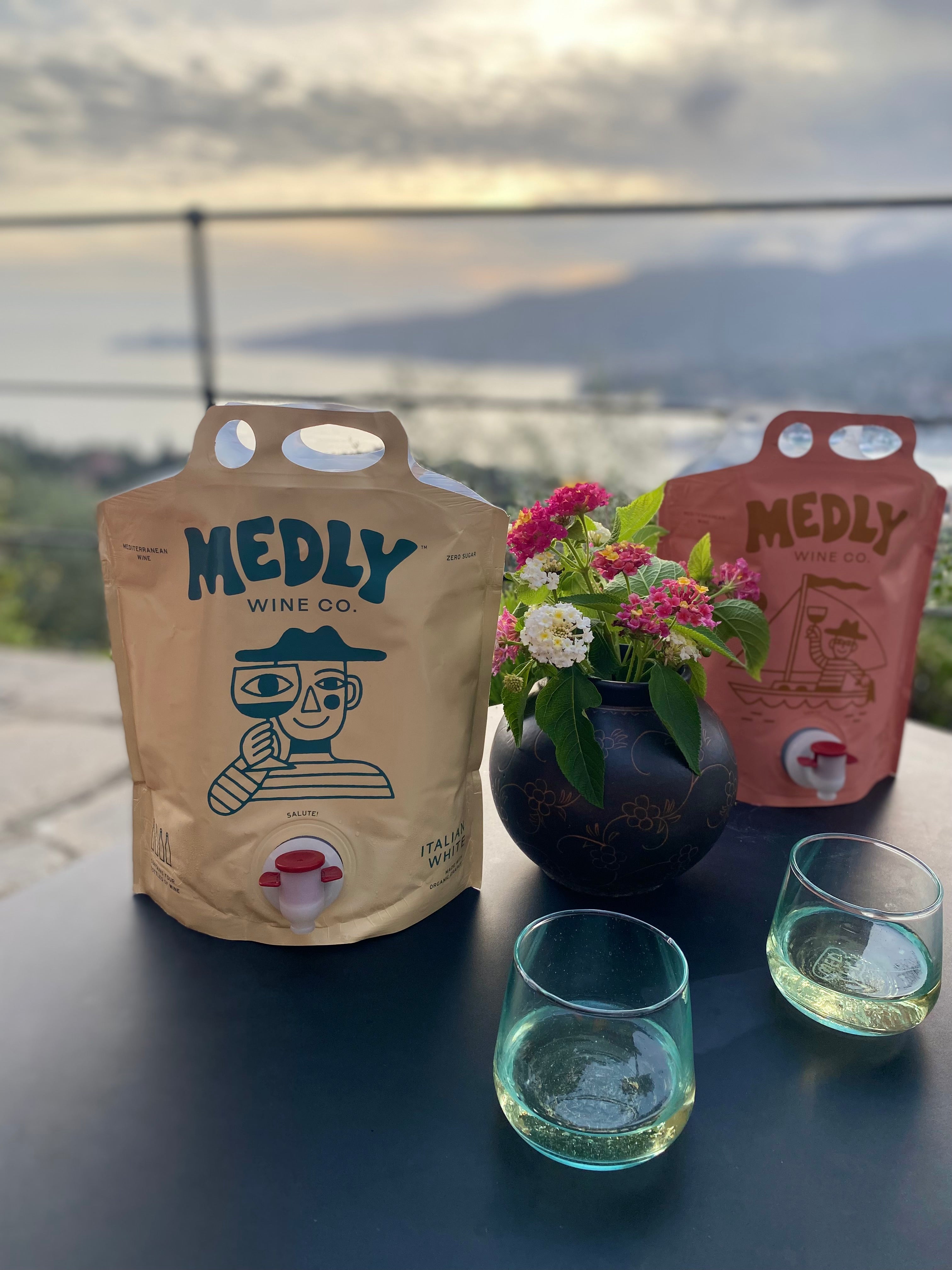
This is also the region behind Medly's Organic Vineyard Italian White. Our Pinot Grigio and Inzolia blend comes from Sicilian vineyards farmed organically for generations, the kind of land and farming the island has always been suited for.
History
Greek settlers introduced viticulture to Sicily around the 8th century BC, and the island became a major wine supplier throughout the ancient Mediterranean. For much of the 20th century, Sicily operated as a bulk wine region, its ripe grapes valued for blending rather than bottling under their own names. Recent decades brought a shift toward quality-focused production, with renewed interest in native grape varieties alongside ecological practices that respect Sicily's ancient winemaking heritage.
That shift toward organic vineyard viticulture has been real, not cosmetic. The island's biodiversity, warm sun, and deep viticultural roots make it a natural fit for low-intervention farming, which is part of why we source from here.
Grapes and wines
Sicily's vineyards are 63 percent white varieties and 33 percent red. For whites, the key grapes are Catarratto, Grillo, and Inzolia. Inzolia is one of the oldest varieties in Sicily, cultivated island-wide, producing a light-bodied, slightly aromatic, easy-drinking wine. It's the grape that adds subtle floral lift and texture to our Italian White, and it pairs naturally with seafood, summer pasta, and lighter dishes throughout the year.
On the red side, Nero d'Avola, often called the "King of Sicilian wines," delivers deep color and rich flavors of plum, cherry, and spice, with a well-balanced structure of acidity and tannins. Nerello Mascalese, grown on the slopes of Mount Etna, produces some of the island's most elegant and structured reds. Many producers describe it as the Barolo of the south.
If you're exploring Italian white wine varieties, Sicilian whites deserve real time. The combination of sun, volcanic soils, sea air, and old vines produces a minerality and brightness that's specific to this island.
5. Puglia: Italy's Heel, and a Region Finally Getting Its Due
Puglia forms the heel of Italy's boot, stretching along the Adriatic coast toward the southern tip of the peninsula. For most of the 20th century, Puglia's intensely ripe, concentrated grapes were shipped north to add body and color to thinner wines from cooler regions. That reputation is changing.
History
Winemaking in Puglia dates to the ancient Greeks and Messapians, who cultivated the region's flat, sun-soaked plains long before Italy existed as a political entity. Puglia is home to up to 200 wineries. For decades, most of their output was left as bulk wine. Over the past 20 years, local producers have been bottling under their own labels, and the region's indigenous varieties are finally earning the recognition they deserve.
Grapes and wines
Puglia's south is known for Primitivo and Negroamaro, while the north grows Sangiovese and Montepulciano. Primitivo is genetically identical to California's Zinfandel, a connection DNA research confirmed in the 1990s. It makes bold, ripe reds with dark fruit, spice, and high alcohol. Negroamaro (roughly "black bitter" in Italian) produces wines that range from rustic and tannic to smooth and fruit-forward depending on how they're made. The best Salice Salentino DOC bottles, made primarily from Negroamaro, are genuine standouts and still underpriced relative to their quality.
For white wine, Verdeca, Bianco d'Alessano, and Fiano produce crisp, dry pours built for Puglia's heat and the seafood-heavy cuisine that defines the region's tables.

Italian White Wine Varieties Worth Knowing
Italy has more indigenous grape varieties than any other country. Over 500 are officially recognized, with some researchers estimating there may be thousands of distinct local grapes, clones, and synonyms across the country. For white wine, a few varieties appear across the regions above and are worth getting familiar with:
-
Pinot Grigio: grown across northern Italy and Sicily; light-bodied, dry, clean, the most widely exported Italian white
-
Inzolia: Sicilian, floral, slightly aromatic, light-bodied, one of the island's oldest varieties
-
Grillo: Sicilian, crisply acidic, fresh, with a faint tropical edge
-
Vernaccia: Tuscan, citrusy, mineral, Italy's first DOC white
-
Gavi (Cortese): Piedmontese, elegant, green apple and almond character
-
Soave (Garganega): Venetian, mineral, clean, built for seafood and lighter dishes
Medly's Organic Vineyard Italian White blends Pinot Grigio and Inzolia from certified organic Sicilian vineyards: zero sugar, minimal intervention, packaged to stay fresh for up to 45 days after opening. It's what Italian white wine looks like when the grapes and the farming are given room to do their job.
What Makes Italian Wine Regions So Different from One Another
Italy's wine diversity comes down to geography, microclimate, and centuries of farmers selecting the grapes that suited their land. Tuscany's inland hills create different conditions than Sicily's sun-baked coastal plains. Piedmont's alpine influence produces entirely different ripening patterns than Puglia's Mediterranean heat. Add over 500 indigenous grape varieties to that picture, and you start to understand why a Barolo and a Primitivo can both be called Italian red wine and taste like completely different categories.
The Italian wine classifications system (DOC, DOCG, IGT) exists partly to protect that regional identity, giving consumers a signal that a wine comes from a specific place and meets specific production standards. Understanding the five regions above gives you a working map. From there, individual wines make much more sense.
For a wider look at how the Mediterranean shapes wine culture and what it means when a brand calls itself Mediterranean, this piece is worth a read. And for the sourcing and farming story behind every Medly bottle, the journey from vine to pouch lays it out plainly.
All of Medly's wines, including the Italian White and the Barbera, are available in the full collection.

FAQ: Italian Wine Regions
What are the 5 most famous wine regions in Italy?
Tuscany, Piedmont, Veneto, Sicily, and Puglia. They account for many of Italy's most exported wines and hold the majority of its DOCG designations. Each region has a distinct climate, soil profile, and set of native grapes that produce wines unlike anywhere else in the world.
What Italian white wines come from Sicily?
Sicily's main white varieties are Catarratto, Grillo, and Inzolia. Inzolia is one of the island's oldest grapes: light-bodied, slightly aromatic, and easy-drinking. Medly's Organic Italian White blends Inzolia with Pinot Grigio, both sourced from certified organic Sicilian vineyards.
What is the difference between Chianti and Barolo?
Both are Italian reds, but they're built from different grapes in different climates. Chianti is made from Sangiovese in Tuscany. It's fruity, dry, and medium-bodied with natural acidity. Barolo is made from Nebbiolo in Piedmont. It's tannic, deeply structured, complex, and built to age for decades. They share a country and not much else in terms of style.
What is Barbera wine, and where does it come from?
Barbera is a red grape native to Piedmont, grown most prominently in Barbera d'Asti, Barbera d'Alba, and Monferrato. It's defined by bright cherry fruit, high natural acidity, and softer tannins than Nebbiolo, which is exactly what makes it one of Italy's most naturally food-friendly reds.
While Barolo and Barbaresco earn most of Piedmont's international attention, Barbera is what Piedmontese families have poured at the dinner table for generations. It pairs well with pasta, pizza, roasted meats, grilled vegetables, and hard cheeses, without requiring anything from the meal.
Medly's Barbera follows that same philosophy: great wine that fits naturally on any table, without the aging requirements or price of Piedmont's prestige bottles.
What makes Sicilian wine different from other Italian wines?
Sicily's warm Mediterranean climate, ancient native grape varieties, and diverse mix of volcanic, calcareous, and clay soils produce wines with a character that's uniquely Sicilian. Sicily has become a leading region for organic viticulture, and its whites, Inzolia and Grillo especially, carry a minerality and freshness driven by sea influence and old vines that don't replicate elsewhere.
What types of Italian white wine are there?
Italian white wine covers a wide range of styles. From the light and mineral Pinot Grigio and Soave of the north, to the floral Inzolia and Grillo of Sicily, to the elegant Gavi of Piedmont and citrusy Vernaccia of Tuscany. The thread connecting the best Italian whites is natural acidity that keeps them fresh and versatile at the table, whatever you're eating.
To happiness and health!
Aaron