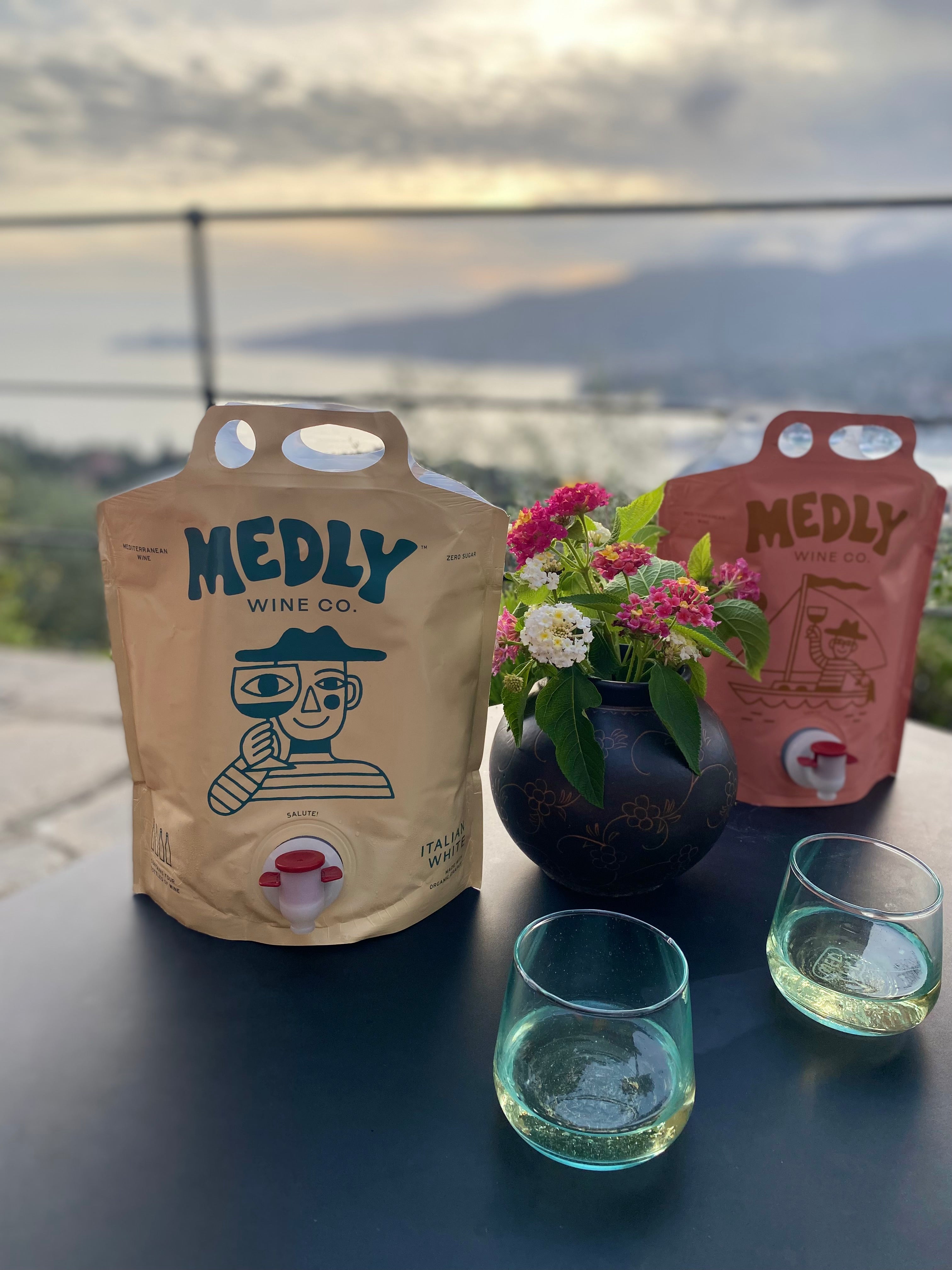
Wine pouches used to be a punchline. Not anymore. The global market for wine sold in bag-in-box and pouch formats is on track to grow from roughly $3.78 billion in 2025 to $5.94 billion by 2034, outpacing much of the broader wine packaging industry. That's not a niche shift. It's a category catching up to something a smaller group of winemakers has argued for a while: the pouch was never the compromise. Glass was.
Here's what's actually driving the shift, and why I'd call it a correction more than a trend.
Quick Guide: Why Wine Pouches Are Having a Moment
-
The global wine bag-in-box market is projected to grow from about $3.78 billion in 2025 to $5.94 billion by 2034.
-
A standard glass bottle can carry a carbon footprint roughly 5 to 8 times higher than the same volume of wine in a bag-in-box pouch, once material and transport are factored in.
-
A pouch collapses as it empties, so the wine barely touches oxygen, which is why wine in a pouch stays fresh for weeks after opening instead of a day or two.
-
No cork, no opener, no glass to break. A spigot does the job a corkscrew and a steady hand used to.
-
One Medly pouch holds 3 liters, the equivalent of four standard 750 ml bottles, from the same two vineyards we've sourced from for years.
What a Wine Pouch Actually Is
"Boxed wine," "bagged wine," and "wine pouch" get used interchangeably, but they're not quite the same thing. The pouch is the flexible, multi-layer bag that actually holds the wine; the box is the cardboard shell some brands wrap around it for shelf display. Medly skips the box and ships the pouch on its own, which is part of why the format reads as different from the Franzia jugs a lot of people still picture when they hear "boxed wine." We've written more about how a pouch stacks up against a glass bottle on packaging if you want the fuller comparison. This piece is about why the format is winning drinkers over right now, not just how it's built.

The Environmental Case Is the Strongest One
Glass is the wine industry's biggest packaging problem, and it's not close. A classic 750 ml glass bottle carries a carbon footprint of roughly 875 kg CO2 per unit of production and transport, compared to about 170 kg CO2 for a 5-liter bag-in-box, a difference of roughly 8 times once scaled to the same volume of wine. A separate 2020 California Wine Institute analysis puts glass at around 29% of a wine's total carbon footprint on its own, with transportation adding another 13% on top, largely because glass is heavy and takes up more truck space per bottle shipped.
A pouch flips both numbers. Sustainable wine packaging like this weighs a fraction of what an equivalent volume of glass weighs, so more wine fits on the same truck, part of why bag-in-box shipments can require several times fewer vehicles to move the same volume as bottled wine. Less material and less weight means less energy to make it and less fuel to move it, before a bottle or pouch even reaches a shelf.
None of that requires taking our word for it. We farm from two certified organic vineyards, in Corbières, France, and Trapani, Sicily, both certified by ECOCERT and ICEA and reinspected annually. Farming cleaner grapes and then shipping them in heavy glass would undercut half the point. Packaging is where that environmental effort actually gets protected or wasted, and it's a bigger factor than most wine drinkers realize.
|
Standard Glass Bottle (×4, ≈3L) |
Medly's 3L Pouch |
|
|---|---|---|
|
Corkscrew or opener needed |
Yes |
No, built-in spigot |
|
Freshness after opening |
A few days |
Up to 45 days |
|
Approximate packaging footprint* |
Highest of common formats |
A fraction of glass, per published LCAs |
|
Shatter risk |
Yes |
No |
*Figures reflect published third-party lifecycle assessments for the format generally, not a Medly-specific test.
Freshness Is the Reason People Stick With It
Sustainability gets people to try a pouch. Freshness is usually what gets them to buy the next one.
An open bottle of wine fights oxygen from the moment the cork comes out, which is why a bottle opened Tuesday tastes flat by the weekend. A pouch works differently: the bag collapses inward as wine is poured, so no air rushes in to replace what's gone. That mechanical difference is why a Medly pouch stays good for up to 45 days after opening, not three or four days.
I ran a small organic vineyard and winery in southwestern Colorado before Medly, and freshness after opening was one of the most common complaints I heard about bottled wine, especially from people who don't finish a bottle in one sitting. A pouch solves that quietly, without a vacuum pump or a rush to finish before the wine turns. For a household that drinks a glass or two on a weeknight rather than a full bottle at once, that's the difference between wine that's still good Thursday and wine headed for the sink.
Convenience Closes the Deal
A pouch doesn't require anything. No corkscrew in a junk drawer, no foil to peel, no cork to wrestle out or occasionally break trying. Pour from the spigot, and that's the entire process, at a picnic, on a boat, in a hotel room, anywhere a bottle and an opener would be one more thing to pack.
It's lighter to carry and impossible to shatter, which matters more than it sounds like it should the first time a wine bottle breaks in a beach bag. A pouch packs flat in a cooler or suitcase in a way four bottles don't, part of why the format keeps showing up at picnics, tailgates, and trips where glass has always been a liability.
The Stigma Is Fading Because the Wine Caught Up
Pouched and boxed wine earned its reputation the hard way: for decades, the format was where the cheapest, least interesting wine went, and the packaging got blamed for a quality problem it was really just associated with. That's shifted as serious winemakers, ourselves included, started putting real, carefully sourced wine into the format instead of treating it as a container for whatever didn't sell as a bottle. If you want the fuller story of how that plays out for us, from the two families we work with to the finished pouch, we've walked through that journey start to finish. Younger wine drinkers in particular judge the wine on its own terms rather than assuming the container tells the whole story, and the market backs that up: alternative formats are gaining ground because they're being taken seriously as a category, not a shortcut.
The format was never the problem. What went inside it, historically, often was. Fix that, and the reasons to prefer a pouch (the lighter footprint, the freshness, the convenience of no corkscrew required) stop being trade-offs and start being the whole pitch.
If you want to see what's actually in the pouch, our French Red, Italian White, and French Rosé all ship this way — browse the full wine collection to see for yourself.

FAQ
Is wine in a pouch actually good quality?
The pouch format itself doesn't determine quality; what's inside does. Medly ships wine from certified organic vineyards in Corbières, France, and Trapani, Sicily, in the same 3-liter pouch, chosen because it keeps wine fresher and travels lighter than glass, not as a shortcut.
Is wine in a pouch more sustainable than wine in a bottle?
Generally yes. Published lifecycle assessments put a 5-liter bag-in-box at roughly 170 kg CO2 in production and transport, compared to about 875 kg CO2 for the same volume in classic 750 ml glass bottles, largely because glass is heavier to make and ship.
How long does wine stay fresh in a pouch after opening?
A Medly pouch stays fresh for up to 45 days after opening. The bag collapses as wine is poured, so air never rushes in, unlike an open bottle, which starts oxidizing the moment the cork comes out.
What's the difference between boxed wine and a wine pouch?
The pouch is the flexible bag that actually holds the wine. Boxed wine usually means that same pouch shipped inside a cardboard box for shelf display. Medly ships the pouch on its own, without the box.
Do I need a corkscrew or any tools to open a wine pouch?
No. A wine pouch comes with a built-in spigot, so pouring is the entire process, with no corkscrew, foil, or cork required.