Rosé is a red wine that stops early. It comes from the same dark-skinned grapes as any red, but the juice spends only a few hours in contact with the skins instead of days or weeks. That short window is the whole story. It is why rosé looks pink instead of purple, why it drinks lighter than red without tasting like a diluted version of one, and why the same grape can show up in a bottle of Bandol and a bottle of Chianti wearing two completely different colors.
This guide covers what actually makes rosé unique: how the color gets there, which grapes do the work, the different styles you'll find on a shelf, and the regions, especially in France, that built their reputation on getting rosé right.

Quick Guide to Rosé Wine
Rosé is made from red grapes, fermented with limited skin contact so the wine stays pink instead of turning red. Beyond that one rule, there is a lot of range.
-
Dry vs. sweet is about sugar, not color. A deep coral rosé from Tavel can be bone dry, and a very pale one can carry noticeable sweetness. Color is a production choice, not a sweetness signal.
-
Pale vs. deep comes down to skin contact time. A few hours of contact make a nearly translucent wine. A day or two makes something closer to salmon or coral.
-
Light vs. structured is about body and tannin. Most rosé is light-bodied with barely-there tannin, but saignée-method rosés from places like Tavel and Bandol carry real weight and a little grip.
-
Still vs. sparkling rosé exists, too, from Champagne down to Cava and Prosecco rosé.
If you're shopping and want a shortcut: lighter color usually means lighter body and a shorter finish, while deeper color usually signals more concentration and a fuller mouthfeel. It is not a perfect rule, but it holds often enough to be useful.
How Rosé Gets Its Color and Structure
Three production methods explain nearly every rosé on the market, and each one shapes both color and structure differently.
Direct press is the gentlest method and the one behind most pale, Provence-style rosé. Red grapes are pressed almost immediately, the way white wine grapes would be, and the juice picks up only a faint tint from brief contact with the skins on the way out. The result is a pale, delicate wine with soft fruit and little tannin.
Maceration lets the crushed grapes sit with their skins for a longer stretch, anywhere from a few hours to about two days, before pressing. Longer contact pulls more color and more of the compounds that give a wine texture, so maceration rosés tend to run deeper in color and carry a bit more grip than a direct-press wine.
Saignée, French for "bleeding". Winemakers making a red wine sometimes draw off a portion of the juice early, while it's still macerating with the skins, to concentrate what's left behind for the red. That bled-off juice becomes rosé, and because it started life as red wine in progress, it tends to be fuller-bodied and more structured than a direct-press wine. Tavel and many Bandol rosés lean on this method, which is part of why those wines drink more like a light red than a delicate blush.
One rule holds across all of it: in the European Union, rosé cannot legally be made by simply blending finished red and white wine. Champagne is the one exception. Everywhere else, rosé's color has to come from actual skin contact with red grapes, which is what separates it from a wine that's just been tinted.
Rosé Wine Grapes
The grapes behind a bottle of rosé matter more than most people realize, because the same grape can carry a signature even at low skin contact.
Grenache is Rosé's workhorse, especially in southern France and Spain. It brings soft red fruit (think strawberry and watermelon) and enough natural sugar potential to keep the wine feeling round rather than sharp.
Cinsault is a lighter, more floral partner grape, common in blends across Provence and the Languedoc. It softens a blend and adds a delicate, almost perfumed edge.
Syrah and Mourvèdre bring more color and structure when they're part of the mix, which is exactly why the saignée-style rosés of Tavel and Bandol, both built heavily on Mourvèdre, drink fuller than a typical Provence blend.
Carignan, the backbone grape of Languedoc appellations like Corbières, adds structure and a savory, herbal note that keeps a rosé from tasting one-dimensional.
Outside France, the grape list shifts by region. Italian rosato leans on Sangiovese, Spanish rosado often runs through Tempranillo or Garnacha (Grenache's Spanish name), and cooler-climate rosé from the Loire Valley or the American Pacific Northwest frequently starts with Pinot Noir, which produces some of the palest, most delicate pink wines made anywhere.

Types of Rosé Wine
"Rosé" covers more ground than the pale pink bottles that dominate summer shelves.
Dry, pale Provençal-style rosé is the category most people picture: light, crisp, barely-there color, built for easy drinking. This is the direct-press style, and it's become the global default for what "rosé" means.
Fuller, structured rosé, the saignée-style wines from Tavel and Bandol, sit closer to a light red in weight and food-pairing range. They can handle grilled meats and richer dishes that would overwhelm a pale Provençal rosé.
Off-dry and blush-style rosé, the category that includes American White Zinfandel, carries noticeable sweetness alongside its color. It's a different animal from dry rosé entirely, built for a different palate.
Sparkling rosé spans everything from rosé Champagne (one of the only wines legally allowed to be blended from red and white) to rosé Cava, rosé Prosecco, and sparkling rosé made in the traditional method around the world.
Vin gris, literally "grey wine," is the palest end of the spectrum: a rosé made with such minimal skin contact that the color barely registers as pink at all.
Rosato (Italy) and rosado (Spain and much of Latin America) are simply the local words for rosé, though the grapes and house styles behind them often differ meaningfully from the French template.
Best Regions for Rosé Wine
France dominates rosé the way Burgundy dominates Pinot Noir, and the numbers back it up. France is both the world's largest producer and largest consumer of rosé, and Provence alone accounts for roughly 40% of France's AOC rosé and about 5% of global rosé production, according to the official Vins de Provence trade body. Demand backs that up globally too: rosé consumption grew by roughly 25% between 2001 and 2021, according to data from the International Organisation of Vine and Wine tracked by the Wine Scholar Guild. If you want to understand rosé, France is where that education has to start.
Provence is the reference point. It's AOCs, led by Côtes de Provence, built the pale, bone-dry, direct-press style that most of the world now associates with rosé, using Grenache, Cinsault, Syrah, and Mourvèdre as the backbone blend.
Tavel, in the southern Rhône, is France's only AOC that produces rosé exclusively. Built on Grenache and often made by saignée, Tavel rosé is deeper in color and fuller in body than a typical Provençal wine, closer to a light red in the glass.
Bandol, back on the Provençal coast, leans on Mourvèdre for structured, age-worthy rosé that can develop for several years, unusual for a category most people drink within twelve months of the vintage.
Languedoc, further west along the Mediterranean coast is where I source Medly's own rosé, from the Corbières appellation. Corbières is known first for its reds (about 85% of the appellation's output), but its rosés, blended from Carignan, Cinsault, Grenache Noir, and Mourvèdre, carry that same herb-and-garrigue character the region is known for, just in a lighter register. I've walked those vineyards with the family who's farmed them for generations, and the wind off the Mediterranean is part of why the grapes come in this concentrated: it's called the tramontane, and it dries the vines and keeps disease pressure low all season.
Outside France, Italy's rosato regions (particularly Puglia and the Veneto), Spain's rosado-producing Rioja and Navarra, and cooler American regions like Oregon's Willamette Valley all make rosé worth knowing, but none has built an identity around it quite like the south of France has.
Rosé's Flavor Profile and Where It Fits at the Table
Because rosé sits between white and red in almost every technical sense (acid, tannin, body), it's one of the most food-flexible wines available. A dry, pale rosé has enough acidity to cut through richer dishes the way a white would, while its faint tannin and red-fruit character let it stand up to things a delicate white can't.
That crossover is exactly why rosé works so well with seafood and shellfish, why it shows up constantly on brunch tables next to smoked salmon and charcuterie, and why it's become the wildcard pick at weddings, bridging red and white drinkers during cocktail hour. If you're building out a full wine and cheese spread, a dry rosé earns a spot alongside your reds and whites rather than as an afterthought.
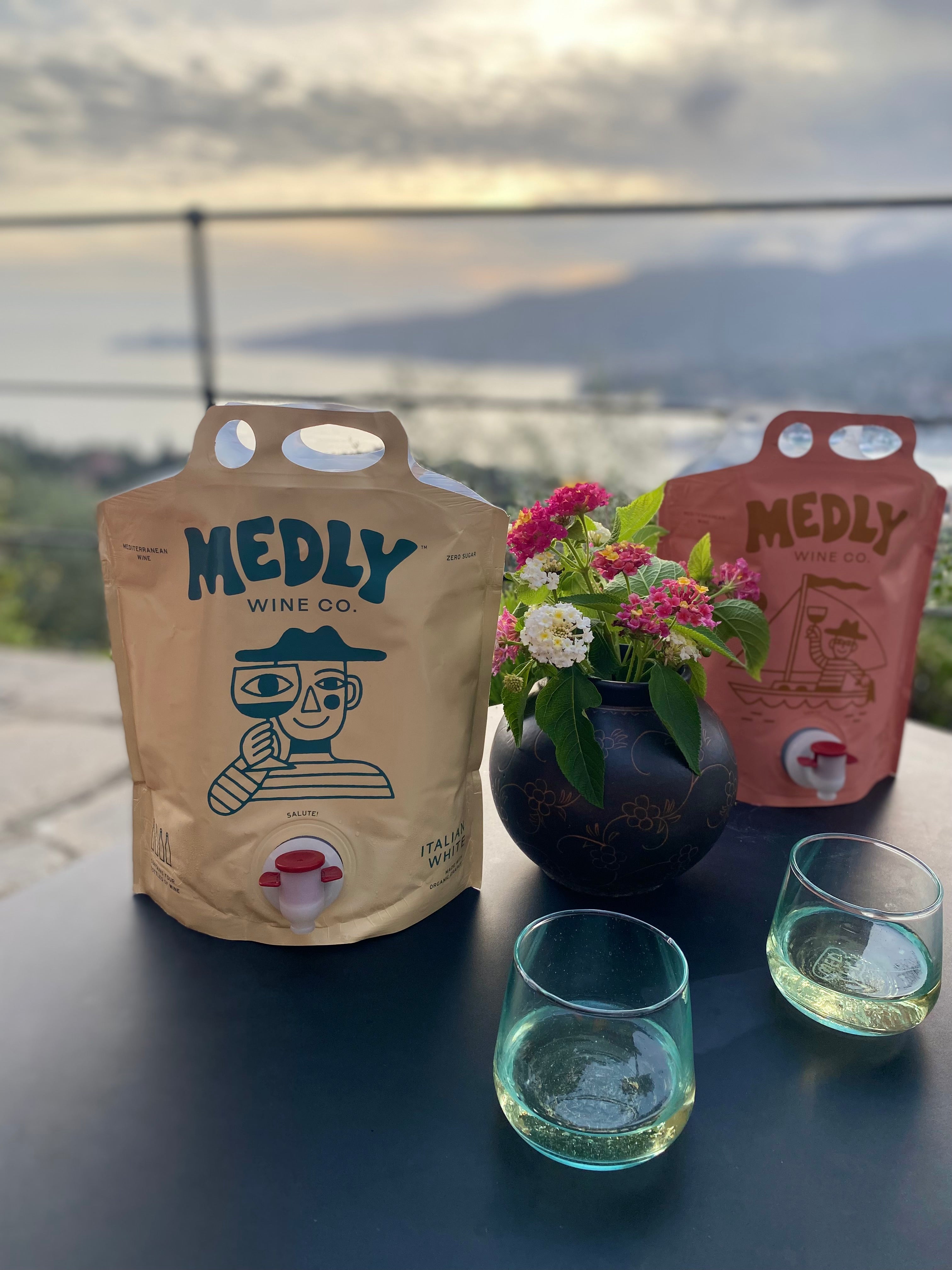
Medly's French Rosé follows the dry, Provençal-adjacent style, but out of Corbières: light, balanced, and built to move from a solo pour to a full table without missing a step. If you're comparing it against the rest of the range, our Complete Guide for Red Wine and Essential Guide to White Wine cover the same ground for the other two styles in the lineup, and you can browse the full Medly wine collection to see how all three sit side by side.

FAQ: Common Questions About Rosé Wine
Is rosé wine sweet or dry?
Both exist, and color doesn't tell you which one you're holding. Most French rosé, especially from Provence, is bone dry. Sweetness is a separate style decision, most associated with blush wines like White Zinfandel rather than with French rosé traditions.
What grapes are used to make rosé wine?
Grenache, Cinsault, Syrah, Mourvèdre, and Carignan dominate French rosé. Sangiovese drives Italian rosato, Tempranillo and Garnacha are common in Spanish rosado, and Pinot Noir shows up in cooler-climate rosé from the Loire Valley, Oregon, and beyond.
What is the best region for rosé wine?
Provence, France, is the benchmark, producing the pale, dry style that defined modern rosé and accounting for roughly 40% of France's AOC rosé output. Tavel and Bandol offer fuller, more structured alternatives, and Languedoc appellations like Corbières produce rosé with real character at a more everyday price point.
Is all rosé French?
No. Italy (rosato), Spain (rosado), and producers across the U.S. all make rosé, but France, and Provence specifically, set the template that most of the rest of the world now follows.
Does rosé wine age well?
Most rosé is made to drink young, within a year or two of the vintage. The exceptions are structured, saignée-style wines like Bandol, which are built with enough concentration to develop for several years.