Every wine starts in the dirt, long before anyone talks about tannin or terroir. Organic wine growing changes that starting point entirely: no synthetic pesticides, no synthetic fertilizers, no synthetic herbicides, for at least three years before a vineyard can even apply for certification. What replaces those tools is a much more hands-on set of decisions, made row by row, season by season.
Most coverage of organic winemaking stops at the mindset shift and the marketing pitch. We've made that broader case elsewhere, including what actually separates organic grapes from conventional ones. Here, the focus is narrower: what organic wine growing requires at the vineyard level, how growers manage soil without synthetic inputs, how they fight mildew without conventional fungicides, how they handle water, and what all of that costs in yield, labor, and time. Then, because I've farmed this way myself, I'll walk through how it plays out on the two certified organic estates behind Medly's own wine.
Quick Guide: What Organic Grape Growing Actually Involves
-
No synthetic pesticides, herbicides, or fertilizers, verified annually by a certifying body, not just claimed on a label.
-
A mandatory transition period, typically three years of organic practices before a vineyard can be certified, during which growers can't yet sell the fruit as certified organic.
-
Soil health comes from cover crops, compost, and crop rotation instead of synthetic fertilizer.
-
Pest and disease control leans on copper and sulfur (both capped by regulation), beneficial insects, and vineyard design rather than conventional systemic chemicals.
-
Yields usually run lower, sometimes by 20 to 30 percent, and labor costs run higher.
-
The trade-off shows up as healthier soil, more resilient vines, and, most growers will tell you, more distinct fruit.

Getting Certified Isn't Instant: The Transition Period
Organic certification isn't a switch anyone flips overnight. In the U.S. and the E.U. alike, a vineyard has to farm organically for a defined transition period, generally three years, before an inspector will certify the fruit as organic. During that stretch, the grower takes on every cost of organic farming (more labor, less chemical backup, unpredictable pest pressure) without yet being able to sell the grapes at the premium certification commands.
That's the first reason organic vineyard certification is a bigger commitment than it looks from the outside. A grower has to be certain enough about the switch to absorb three full growing seasons of reduced flexibility before certification even kicks in. It's also why certification isn't a one-time event. Bodies like ECOCERT and ICEA, the certifiers behind Medly's own French and Italian vineyards, reinspect every year against the specific standards those certifications actually require. A grower doesn't get certified once and coast. The standard has to hold up season after season.
Europe has a real head start here. France, Spain, and Italy together hold the large majority of the world's certified organic vineyard acreage, the product of a farming philosophy and a regulatory framework that both got moving decades before the U.S. did, a gap we've covered in more depth elsewhere.
Building Soil Health Without Synthetic Fertilizer
Conventional vineyards can lean on synthetic nitrogen to push vine growth on a schedule. Organic growers can't, so soil health becomes the actual engine of the vineyard instead of an afterthought.
Vineyard cover crops do most of that work, a cornerstone of sustainable viticulture that replaces a bag of synthetic fertilizer with a living system. Growers seed the rows between vines with clover, vetch, or other legumes that fix nitrogen naturally in the soil, while also reducing erosion and giving the vineyard's insect population somewhere to live besides the grapevines themselves. A systematic review of cover cropping in viticulture found that the practice measurably changes shoot growth, fruit set, and even a vine's susceptibility to pests and disease, though the exact effect depends heavily on which cover crop is used. Compost, often made from the vineyard's own pomace and stems after harvest, adds organic matter back into the soil in a closed loop instead of trucking in synthetic inputs.
None of this is passive. A grower has to manage the cover crop (when to mow it, when to till it under) rather than applying fertilizer on a schedule and moving on.
Managing Pests and Disease Without Conventional Chemicals
This is where organic pest control gets the most technical, and where the two biggest fungal threats to a vineyard, downy mildew and powdery mildew, force some real trade-offs.
Copper is the primary tool against downy mildew in organic viticulture, applied as a Bordeaux mixture of copper sulfate, lime, and water that's been in use since the 1800s. It works, but copper accumulates in soil over time, which is why regulators have tightened how much growers can use. Current E.U. rules cap copper at 4 kilograms per hectare per year, averaged over seven years, per peer-reviewed research on vineyard mildew management, a real constraint in a wet, mildew-prone vintage. Sulfur is the standard tool against powdery mildew instead, and research shows that adding sulfur to a copper spray improves its effectiveness against downy mildew too, which is why the two are frequently tank-mixed rather than used separately.
Beyond spraying, growers lean on vineyard design itself as pest control. Canopy management, keeping the leaf cover open enough for air to move through, reduces the humidity mildew needs to take hold. Beneficial insects like ladybugs, lacewings, and predatory mites get encouraged rather than wiped out along with the pests they eat, and companion planting near the vines can help repel some insects outright. It's a different mindset from conventional integrated pest management: fewer reactive inputs, more decisions made in advance about the vineyard's layout and ecosystem.

Water Management: Dry Farming and Its Trade-offs
Not every organic vineyard dry farms, and dry farming isn't exclusive to organic growers, but the two often show up together because both are rooted in working with a site rather than correcting it.
Dry farming means relying on residual soil moisture instead of irrigation, letting the vine's roots grow deep in search of water rather than staying shallow near a drip line. The trade-off is yield: dry-farmed vineyards typically produce around 2 to 3 tons of grapes per acre, against roughly 4 tons for an irrigated vineyard growing premium wine grapes. In exchange, growers report smaller, more concentrated berries and a wine with more intensity, since the vine isn't diluting its fruit with extra water. It's a real economic decision, not a purely philosophical one: a grower has to believe the quality gain is worth roughly a quarter less tonnage per acre.
The Real Costs and Trade-offs
Add it up, and organic grape growing costs more in ways that don't show up in a single line item. Labor runs higher: weeding without herbicides, pruning for airflow instead of density, scouting a vineyard row by row for early pest signs. Yields run lower, from the growing methods themselves and from the higher risk of losing part of a crop a synthetic fungicide might have suppressed more completely. Certification adds ongoing inspection costs on top of the three-year transition, where none of that investment is recouped at organic prices yet.
None of that is a secret to anyone who's tried it. It's also exactly why organic viticulture, and biodynamic farming, which layers additional practices like composting preparations and lunar planting calendars on top of the organic baseline, remain a minority of global vineyard acreage even where consumer demand keeps growing.
Why Winemakers Take This On Anyway
The costs are real, but so is what a grower gets back. Soil that isn't dependent on synthetic inputs tends to hold water better, erode less, and support a more resilient vine over decades, not just one vintage. Growers who've farmed both ways consistently describe the fruit itself as more expressive, carrying more of the site's character instead of a flavor profile smoothed out by heavy intervention.
I ran a small organic vineyard and winery in southwestern Colorado before Medly, and the trade-off was never subtle. Every decision took longer to pay off and cost more up front. But the vines got healthier every year I farmed that way, not less, and that compounding return is the actual case for organic growing once you get past the marketing version of the story.
How Medly's Two Estates Farm This Way
Medly sources from two family-run, certified organic vineyards: one in Corbières, in France's Languedoc-Roussillon region, farmed by the same family since 1605 and certified organic since 1991, and one in Trapani, Sicily, farmed by a family now on its sixth generation and certified organic since the late 1990s. Both are reinspected every year, ECOCERT audits the French estate and ICEA audits the Italian one, against AB and EU Organic standards.
What that annual certification verifies is everything covered above: no synthetic pesticides, no synthetic herbicides, no synthetic fertilizers, full stop, on fruit sold as certified organic grapes and checked by a third party every year rather than taken on the label's word. It's a different question from what happens after harvest, where Medly's own rule is just as strict: grapes, native yeast, and minimal sulfites (30 to 50 parts per million) in the finished wine, and nothing else, a decision explained in more detail here. The growing decisions this piece just walked through are what make that short an ingredient list possible in the first place.

FAQ: Organic Grape Growing
How long does it take to become a certified organic vineyard?
Typically three years of documented organic practices before a certifying body will approve the vineyard, though exact timelines vary by country and certifier.
Do organic vineyards use pesticides at all?
Yes, but only a short list of approved materials, primarily copper and sulfur-based treatments, biological controls, and plant-based options, rather than synthetic systemic pesticides.
What's the difference between organic and biodynamic farming?
Biodynamic farming starts with the organic baseline (no synthetic inputs) and adds additional practices on top, including specific composting preparations and a planting calendar tied to lunar and astronomical cycles.
Why does organic grape growing cost more?
Mainly labor and yield. Manual weeding, denser scouting for pests, and lower harvest tonnage all add cost that synthetic inputs would otherwise reduce.
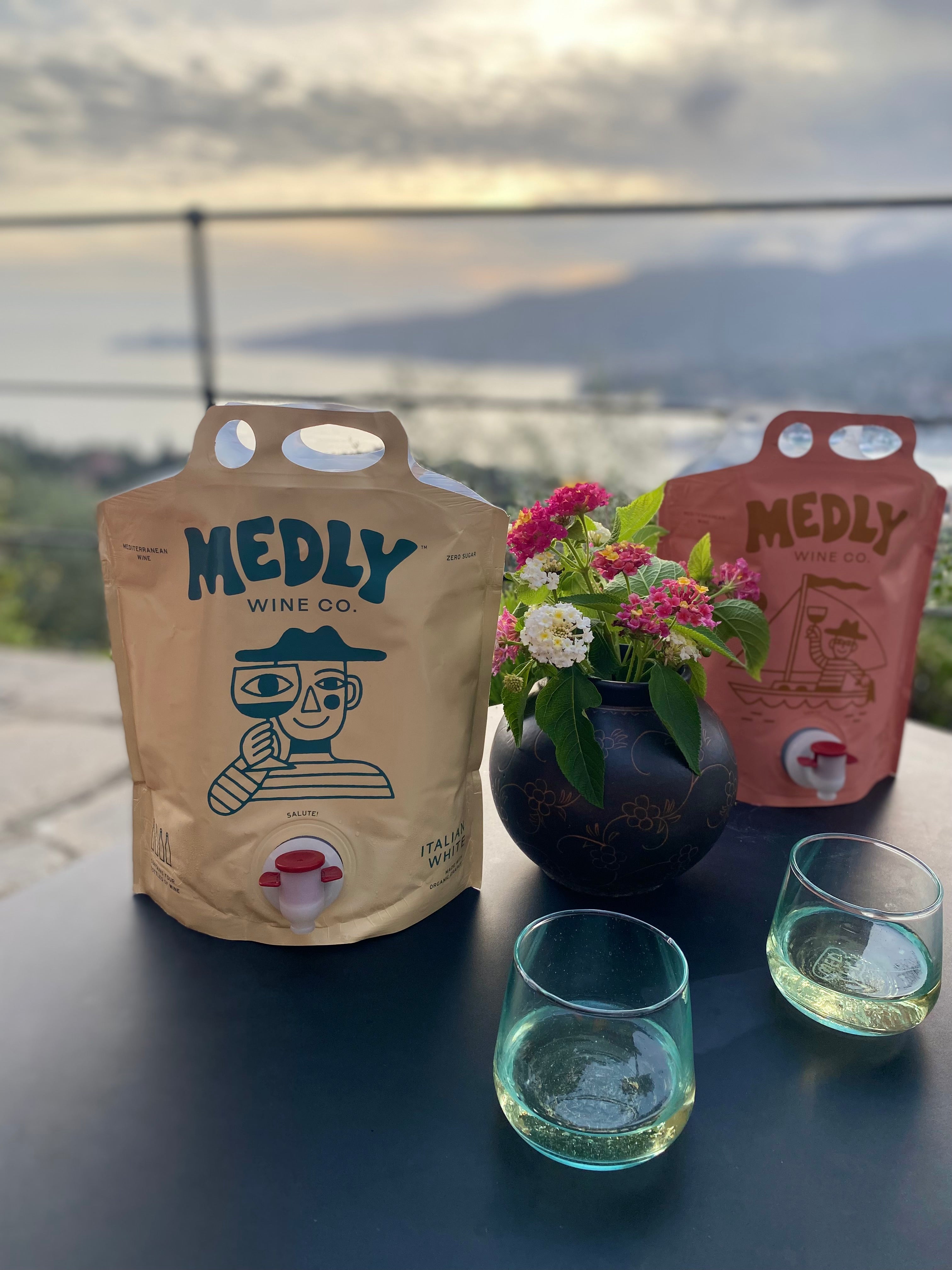
Every certified organic vineyard we work with went through exactly this process to earn that certification, and it's why the two family estates behind Medly's French Red, French Rosé, Italian White, and Italian Red are worth knowing about, not just the finished pouch. If you want to taste what that farming produces, our full wine collection is a good place to start, or go straight to the French Red from the Corbières estate or the Italian White from Trapani.