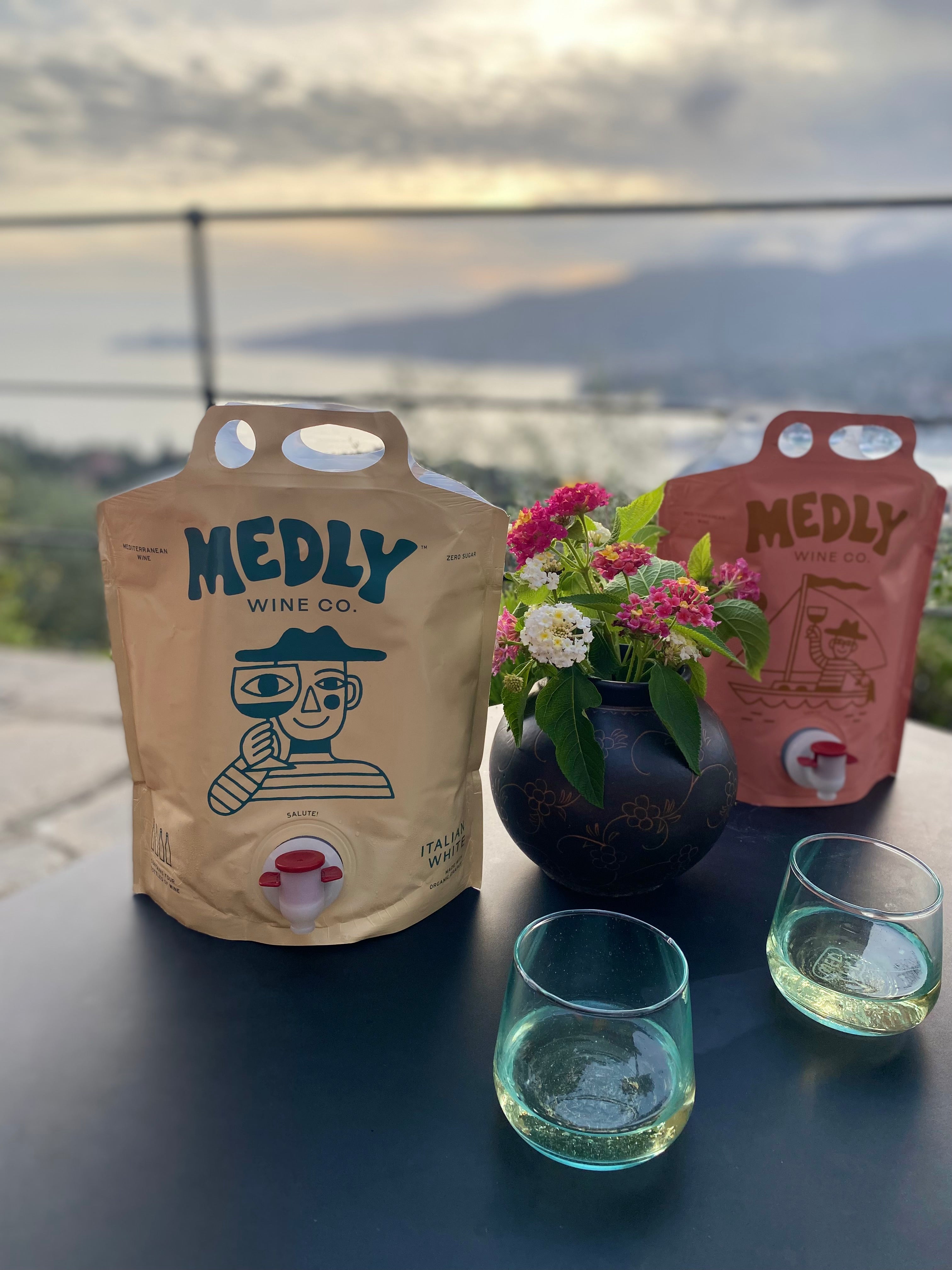
Clean and commercial white wine ingredients start in the exact same place: grapes, yeast, and time. What separates them is everything added after fermentation, to fix a haze problem, stop a wine from spoiling, or manufacture a flavor that isn't really there. That's where the two paths split.
When I ran a small organic vineyard and winery in southwestern Colorado, additive sheets like the one below were standard reading before I ordered anything for a vintage. Most wine drinkers never see that side of the process, and that gap is exactly why two bottles can sit next to each other on a shelf, cost about the same, and be built in completely different ways underneath the label.
Most of what separates them gets added quietly. Under U.S. law, a bottle of wine only has to disclose one thing about what went into it: whether it contains sulfites. Fining agents, acid adjustments, and flavor or texture additions all stay off the label. The Alcohol and Tobacco Tax and Trade Bureau (TTB), which regulates U.S. wine production, approves a long list of materials for winemaking use as long as they're consistent with good commercial practice and cleared by the FDA as generally recognized as safe. Medly's own count puts the number of substances U.S. producers can use without telling you at 76.
None of that makes commercial wine dangerous. It makes it opaque. Here's what's actually going into a lot of white wine, and what changes when a producer skips it. (For the same breakdown on the red side, we've covered that separately.)

Quick Guide: Clean vs. Commercial White Wine Ingredients
-
Clean, low-intervention white wine sticks close to grapes, native or simple cultured yeast, and minimal sulfites. Nothing gets added to fix a problem that better fruit or slower winemaking would have avoided.
-
Commercial white wine leans on fining agents, acid corrections, stabilizers, and sometimes flavor additives to hit a consistent, predictable profile at scale, batch after batch.
-
The label won't tell you which one you're holding. Sulfites are the only required disclosure; the rest is up to the producer.
-
Taste and mouthfeel usually give it away before an ingredient list ever could.
Fining Agents: The Additive Most Wine Drinkers Never Hear About
Fresh-pressed white wine is naturally hazy. Proteins, dead yeast cells, and tiny grape particles float in it until something pulls them out, a process winemakers call fining.
Traditional fining agents come from animals. Isinglass, made from fish bladders, has historically been the agent of choice for clarifying white wine specifically, while casein (milk protein) and egg whites do similar work in other styles. None of it is vegan, and a Master of Wine consulted recently on modern fining practices pointed to pea and potato protein as the closest plant-based substitutes winemakers now reach for instead.
Plant-based alternatives clarify wine just as effectively without any animal input, and they're what low-intervention producers use, if they fine the wine at all. Some skip fining entirely and let the wine settle and clear on its own, which takes longer but adds nothing. It's also the reason a wine can call itself vegan: Medly's wines qualify because nothing animal-derived ever touches them, the same ingredient question that comes up for gluten-free and low-sugar wine shoppers checking labels for the same reasons.
Acid and Sugar Adjustments You Won't See Coming
Grapes don't always ripen evenly, and a hot or cool vintage can throw off a wine's natural balance. Commercial producers have tools to fix that after the fact. Tartaric, citric, or malic acid can be added to sharpen a flat wine, and sugar can go in before fermentation (chaptalization) or after (back-sweetening with grape concentrate) to raise alcohol or round out sweetness the fruit didn't provide on its own.
None of that is disclosed either. A wine can carry "no added sugar" language on the front of the bottle and still have started their life with a sugar addition during fermentation, since chaptalization is aimed at alcohol, not necessarily the finished sugar reading. The only way to know for certain is to know how the wine was actually made.
Medly's approach here is simple: the wine ferments fully dry, with zero added sugar at any stage. If you're curious how sugar behaves in wine more broadly, we've covered that in detail elsewhere.
Stabilizers That Keep Commercial Wine Shelf-Stable
Off-dry and lightly sweet white wines carry a real risk: any leftover sugar can restart fermentation in the bottle. Commercial producers manage that with potassium sorbate, usually paired with potassium metabisulfite, to keep dormant yeast from waking back up.
It works, and it's approved for good reason. But it's also one more input that a fully dry-fermented wine simply doesn't need. When there's no residual sugar left for yeast to feed on, there's nothing to stabilize against in the first place.
Sulfites deserve their own mention, since they're the one additive the label actually has to disclose. We've written a full breakdown of how sulfites work and how much is normal if you want the details. The short version: Medly uses minimal sulfites, in the 30 to 50 ppm range, well under the 100 ppm ceiling allowed for wine made from certified organic grapes, and far under the 150 to 250 ppm common in conventional retail wine.
Flavor Shortcuts: Oak Without the Oak
A real oak barrel costs upward of a thousand dollars and takes months to do its work. Producers who want vanilla, toast, and spice characters without the cost turn to oak chips, staves, or liquid oak essence dropped directly into a steel tank. It's a legitimate technique that can get close to the real thing, but the flavor tends to sit on top of the wine rather than integrate into it.
Some producers go a step further with reserve aroma compounds, concentrated flavor additives that boost or standardize a wine's aromatics so every bottle smells the same regardless of vintage variation. The EU has already started requiring disclosure here: wines treated with oak alternatives must say so on the label in Europe, a transparency step the U.S. hasn't matched yet.
Low-intervention white wine skips this layer entirely. Whatever aroma is in the glass came from the grape and the fermentation, not a lab.

Clean vs. Commercial White Wine Ingredients, Side by Side
|
Common Commercial Addition |
What It's For |
Clean / Low-Intervention Alternative |
|---|---|---|
|
Isinglass, casein, or egg whites |
Clarify haze from proteins and yeast |
Bentonite clay, pea protein, or no fining at all |
|
Potassium sorbate + potassium metabisulfite |
Stop bottle refermentation in off-dry wine |
Ferment fully dry, with no residual sugar to protect |
|
Tartaric, citric, or malic acid |
Correct acidity in under or over-ripe fruit |
Pick at the right ripeness and let the vineyard do the balancing |
|
Oak chips, staves, or liquid oak essence |
Add barrel flavor cheaply and quickly |
Real barrel aging, or no oak character at all |
|
Reserve aroma compounds |
Standardize or boost aroma across batches |
Native or simple cultured yeast expressing the grape's own character |
A wine built on the right side of that table doesn't need a marketing claim to prove it. The Essential Guide to White Wine covers how to taste for that difference, style by style. And for the bigger picture on how organic and conventional winemaking diverge beyond just the additive list, see our full breakdown, or read up on what "certified organic" actually requires before trusting a label at face value.
How to Taste and Feel the Difference
Ingredient lists aside, clean and commercial white wine usually announce themselves in the glass.
Over-fined, over-filtered white wine tends to feel thin and uniform. It's technically clean, but it's also stripped of texture, the same in every bottle, every vintage. Wine with less intervention keeps more of its natural weight and a little variation batch to batch, because nothing evened it out artificially.
Oak additives are usually the easiest tell. Real barrel character builds slowly and integrates with the fruit. Chip- or essence-driven oak tends to sit on top, sharp and a little one-dimensional, especially on the finish.
And added sugar changes the whole shape of a wine. A dry white that's actually dry finishes clean and a little tart. A back-sweetened wine often tastes rounder up front and stickier on the finish than the label's dryness claim would suggest.
None of this requires a trained palate. It just requires paying attention to what's actually in the glass, and asking a few more questions about how it got there.

FAQ
Is white wine vegan?
Not always. Wines fined with isinglass, casein, or egg whites aren't vegan, and the label usually doesn't say. Wines fined with bentonite or pea protein, or left unfined, are vegan. Medly's wines are vegan across the board.
Does white wine have added sugar?
It can. Chaptalization adds sugar before fermentation to boost alcohol, and back-sweetening adds it after fermentation for flavor. Neither has to appear on the label. A wine fermented fully dry, like Medly's, has zero added sugar at any stage.
Are wine additives required to be listed on the label?
No, with one exception. U.S. law requires a sulfite disclosure above 10 ppm. Fining agents, acid adjustments, stabilizers, and flavor additives generally don't require label disclosure.
What makes a wine "clean" or "low-intervention"?
There's no legal definition, so it comes down to production choices: minimal or no fining, no added sugar, no acid correction, no flavor additives, and sulfites kept as low as the wine can safely handle.
Final Thoughts
Commercial white wine isn't doing anything illegal. It's using tools that are legal, approved, and mostly invisible to the person drinking it. Clean, low-intervention white wine is a choice that skips most of those tools and lets grapes, yeast, and time do the work instead.
Medly's Italian White is built that way: Sicilian Pinot Grigio and Inzolia, yeast, minimal sulfites, and nothing else. If this breakdown has piqued your interest in what it actually tastes like, our Italian white is where we'd point you.