Planning a wedding bar is one of those decisions that sounds small until you're standing in front of 80 people who all want a glass at the same time. The good news is that a DIY wine bar is easier to pull off than most couples expect, and it can look genuinely beautiful without a catering company running it.
This guide covers what to actually stock: the wines, the glassware, a carafe or two, ice tubs to keep whites cold, and the small details that make a bar feel intentional rather than thrown together. If you've already worked out how much wine you need, you're halfway there. If not, our guide to wedding wine quantities has a calculator and formula that takes the guesswork out.
The Wines: What to Have at the Bar
Keep it to three styles. A white, a red, and a rosé cover every palate at the table without turning your bar into a sommelier's cellar. Offering all three also means you can pair across a full wedding menu, from cocktail hour through dinner service.
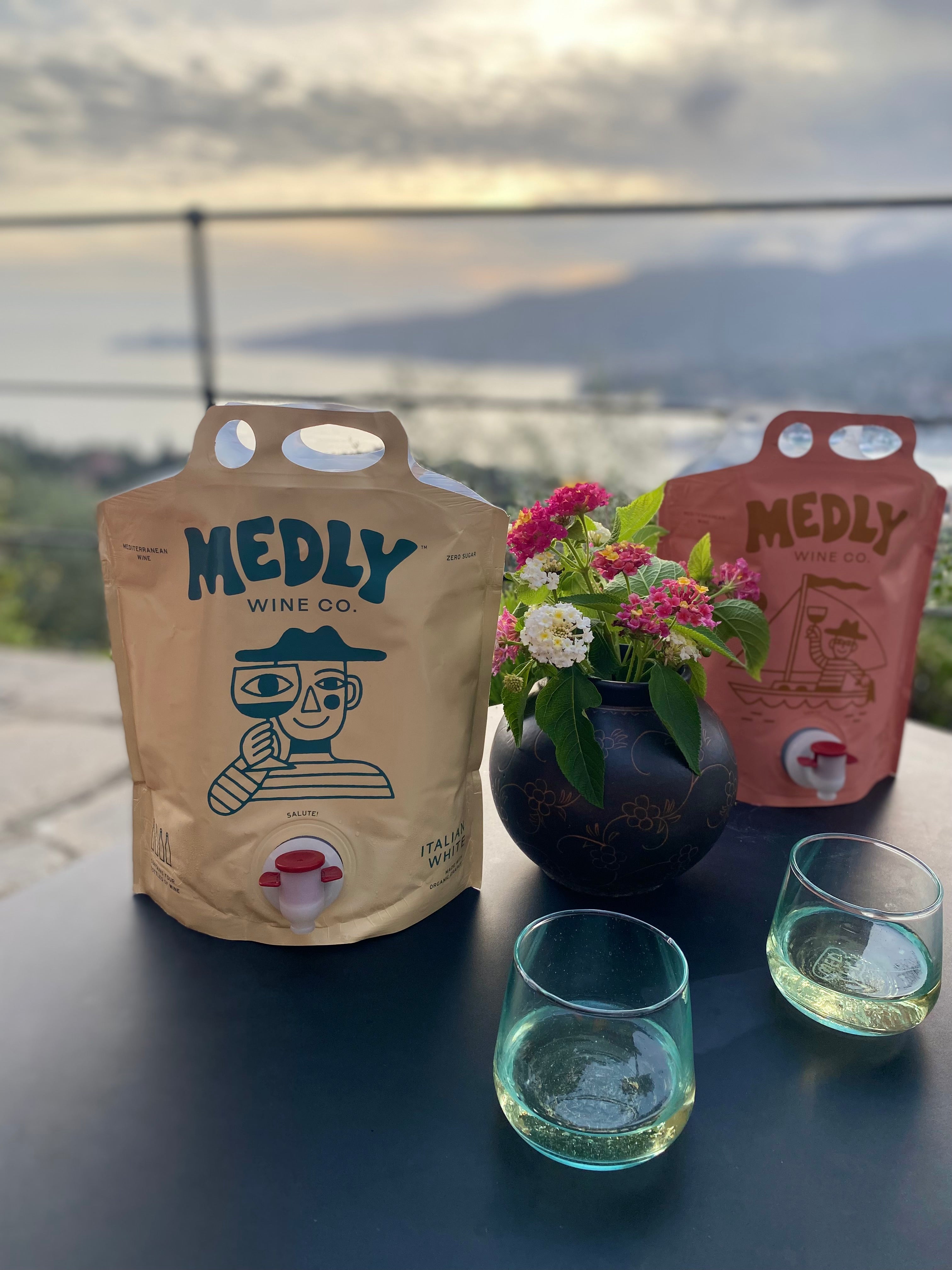
White wine is consistently the most popular pour at weddings. It's light, crowd-friendly, and works at any time of day. A crisp, dry Italian white with some minerality carries well from cocktail hour into dinner. Medly's Italian white wine, a blend of Pinot Grigio and Inzolia from multi-generational family estates, fits this role cleanly: refreshing, food-flexible, and easy for guests who don't usually drink wine.
Red wine earns its place at dinner service. Look for something medium-bodied and approachable rather than heavily tannic, so it works for guests who are on their second glass as much as their first. Medly's organic grape red blend, built on Malbec, Cabernet Sauvignon, Grenache, and Cinsault, runs smooth and warm rather than punishing.
Rosé is the wildcard that photographs beautifully and appeals to a broader crowd than most people expect. For spring and summer weddings especially, a dry rosé rounds out the bar and gives guests a third option that doesn't feel redundant. Medly's rosé is dry, not sweet, which tends to work better across food service.
For guidance on pairing each of these styles with a wedding menu, A Bride's Guide to Wine has specific pairings by course.
If you want to simplify purchasing, building a bundle lets you order all three in one place and customize quantities.
How Much to Stock
Plan for roughly one drink per guest per hour. For a five-hour reception with 100 guests, that's 500 drinks total. If wine is the primary option at the bar (rather than a full open bar), plan for wine to cover about 60% of consumption.
One Medly pouch equals four standard bottles, roughly 20 glasses. For 100 guests over five hours at the 60% wine split, you need around 300 wine servings: 15 pouches. Add two or three extra across styles for safety. Running out of white at hour three is a problem; running out of red is manageable.
Keep an eye on the ratio across styles: white typically goes faster than red, and rosé runs out before people expect it to. Order more white than you think you need, and keep at least two extra pouches of rosé in reserve.

Glassware: What You Actually Need
Budget weddings often rent basic stemmed wine glasses and call it done. That works. But if you want the bar to feel elevated, a few handblown glasses can anchor the setup visually and give guests a better sensory experience without the cost of renting crystal for 100 people.
For a DIY bar, you don't need one glass style per wine type. A universal wine glass, wide enough to let white wines breathe slightly and catch the aromatics of a red, covers all three styles.
Medly's Trattoria hand-blown artisan wine glasses are made by Italian artisans and sold in sets of two, which makes them practical for a display bar, a head table, or a couple's pour during toasts. Pair them with a Glasses & Carafe Set if you want the carafe to match.
For quantity, plan on 1.5 glasses per guest per night if you're not doing mid-party glass swaps. Some guests abandon glasses; having extras prevents scrambling.
A Carafe or Decanter: More Useful Than It Looks
Most people skip the carafe. Most people should reconsider.
A carafe at the bar serves two purposes. First, it lets you pour wine from a pouch or bottle into a presentation vessel that looks intentional on the table, not utilitarian. Second, it gives red wine a brief open-air rest, which can soften an already-approachable blend and let its aromatics open up before guests pour.
You don't need an elaborate decanting ritual. Set out a full carafe of red at the start of dinner and refill as needed. For white wine, skip the carafe at the bar itself (white loses temperature too fast out of ice) and pour directly to glass from a chilled vessel.
Medly's hand-made glass wine carafe is the right tool for this: artisan-made, clean lines, and sized for a practical pour rather than a cellar showpiece.
Keeping Wine Cold: Ice Tubs and Chillers
White wine and rosé both want to sit around 45–55°F through service. That means pulling them from refrigeration about 10–15 minutes before pouring and keeping them in ice through the reception, not just for the first hour.
A galvanized metal tub or a wine ice bucket on the bar table keeps whites cold without needing a server to run back and forth to a refrigerator. For a longer reception or outdoor summer event, plan for enough ice to last the full service, roughly one pound of ice per bottle per hour in warm weather.
Fill the tub with a mixture of ice and a little cold water rather than ice alone. Ice-and-water contact chills a bottle faster and keeps the temperature more even than dry ice. For the bar setup, two tubs work well: one for whites and one for rosé, positioned at opposite ends so guests don't have to reach across each other.
If you're serving outside in direct sun, add a tablecloth that drapes to the ground and covers the tub. It looks clean and keeps ice from melting at double speed.
The Bar Table Setup: Small Details That Read Well
The wines, glasses, carafe, and ice do the work. A few extras round out the experience:
A handwritten or printed bar menu listing the three wines and a short description (two or three words: "bright, citrus-forward white," "smooth Mediterranean red," "dry stone-fruit rosé") tells guests what they're drinking without them having to ask.
Napkins and a drip cloth under the carafe and ice tub keep the table looking clean through the reception rather than wine-stained by hour two.
A small snack pairing at the bar, even just good olives or a simple cheese plate, turns a drink station into a moment. Our beginner's guide to wine, cheese, and charcuterie has a straightforward framework for what to put on the board.
If you're planning a full tasting setup or want the bar to feel more like an event within the event, how to host a blind wine tasting party has ideas that translate directly to a wedding bar setup during cocktail hour.
One Thing Worth Considering: Packaging
Glass bottles at a wedding create logistics. They're heavy, they need corkage, they generate significant recycling waste, and a dropped bottle on a stone patio ends the evening for whatever section of guests witnessed it.
Medly's pouches simplify all of that. Each pouch holds the equivalent of four standard bottles, which means fewer containers on the bar, easier transport, and no corkscrews needed. The pouch format also keeps wine fresh longer after opening because it collapses as wine is poured, reducing oxygen contact. For a bar that's open across a five-hour reception, that matters.
The format is also a significant waste reduction at a time when more couples are factoring sustainability into their planning. Medly's packaging cuts glass bottle waste at scale, which is worth a mention to guests who ask about the setup.

Frequently Asked Questions
What wines should I have at a DIY wedding bar?
Three styles cover every guest: a white wine, a red wine, and a rosé or sparkling option. White wine is the most-requested at weddings; red anchors dinner service; rosé and sparkling give you a third option that photographs well and appeals to light drinkers.
How many wine glasses do I need for a wedding?
Plan on 1.5 glasses per guest for a standard reception. Some guests switch styles mid-reception and set down their first glass. Having a small reserve also covers breakage without a visible scramble.
Do I need a carafe at a wedding wine bar?
Not required, but worth it for red wine. A carafe lets red wine breathe slightly before guests pour, which softens tannins on even a smooth blend. It also looks more intentional than setting open pouches or bottles directly on the table.
How do I keep white wine cold at a wedding bar?
Set whites and rosé in a metal tub or wine bucket with ice and cold water. Fill the tub at the start of service and plan for one pound of ice per bottle per hour in warm outdoor settings. Pull whites from refrigeration 10–15 minutes before service starts, not hours before.
How much wine do I need for a 100-person wedding?
For a 100-person, five-hour reception where wine is the primary option, plan for around 300 servings of wine. That's 15 Medly pouches (each equivalent to four bottles, or roughly 20 servings). Add a few extra across styles, especially white, which goes fastest.