More wine drinkers are asking gluten‑related questions than ever before, driven by celiac awareness, gluten sensitivities, and general wellness trends. People want clarity: Is wine truly gluten‑free? Are certain styles safer? And what should highly sensitive drinkers look out for?
Wine feels like it should be safe. It comes from grapes, not grains. But then you hear a few myths about gluten-free wine, and suddenly it all feels a little less straightforward.
Is Wine Naturally Gluten Free?
Before getting into special cases, it helps to understand what wine actually is. Almost all of the time, you are talking about fermented grape juice, and grapes themselves contain no gluten at all.
Why Wine Begins Gluten Free
-
Wine is made from fermented grapes, which naturally do not contain gluten.
-
Fermentation does not introduce gluten‑containing compounds.
-
The base wine is inherently a gluten‑free beverage.
This is why many celiac and gluten focused organizations group wine in the “generally safe” category, especially in comparison with beer or malt-based drinks.
Where Gluten Can Potentially Enter
Any gluten risk usually comes from what happens around the wine instead of the grapes themselves. Potential sources include:
-
Cross‑contact in production facilities.
-
Certain fining agents (though gluten‑based agents are nearly obsolete).
-
Historical barrel‑sealing practices using wheat paste.
For modern wineries, these practices are often tightly controlled or no longer used. For anyone highly sensitive, understanding these details can bring peace of mind.
Guidance From Trusted Organizations
Organizations such as Beyond Celiac, Gluten.org, and Coravin consistently state that wine is generally considered gluten‑free, with only minimal theoretical risks associated with certain production techniques.
What Can Cause Gluten Cross-contamination in Wine?
Most wine lovers never experience gluten related issues from wine, but if you are medically sensitive, it can be helpful to know where trace amounts could appear.
Barrel Sealing & Aging
Historically, some wineries used a wheat-based paste to seal oak barrels. That paste sat between wooden staves, not stirred into the wine, and even then, gluten transfer into the finished wine was extremely small.
Today, this method is uncommon, especially in quality driven cellars. Many producers use stainless steel tanks or alternative sealants instead of wheat-based pastes.
For most gluten sensitive drinkers, even traditionally aged wines are not a problem. Ultra-sensitive individuals might prefer producers who confirm that wheat paste is not part of their barrel program.
Additives & Clarification Agents
Winemakers often clarify wine so it looks clear instead of hazy - this step is called fining or filtration.
Modern fining agents are, in nearly every case, gluten free. Modern fining agents are overwhelmingly gluten‑free:
-
Bentonite clay
-
Egg whites
-
Casein (a milk protein)
-
X-flow filtration (what we use for Medly wines)
Gluten‑based fining agents used decades ago have largely disappeared from commercial winemaking. Many wineries now focus on cleaner, simpler methods that respect the fruit.
Medly uses cross-flow filtration to polish the wines gently, keeping the profile pure while avoiding gluten-containing agents and unnecessary additives.
Production Facility Cross‑Contact
Cross‑contact is possible if a facility also makes beer, flavored malt beverages, or gluten‑containing drinks. Dedicated wine facilities pose almost no gluten risk.
If you’re unsure, reach out to the producer for more information. Transparent wineries usually answer these questions openly, especially when wellness focused customers ask. Reach out to us anytime, we’d love to hear from you.
Which Wines Are Safest for Gluten Sensitive Drinkers?
Once you know the basic risks, the next step is choosing styles that are straightforward and consistently low risk for gluten sensitive drinkers.
-
Still Wines (Red, White, Rosé): Naturally gluten‑free and the safest choice for gluten‑sensitive and celiac drinkers.
-
Sparkling Wines: Champagne, Prosecco, Cava, and most sparkling wines are gluten‑free unless flavored after primary production.
-
Flavored or Specialty Wines: Mulled wines, dessert wines, and flavored wines may include gluten‑containing syrups or additives, making label checks essential.
-
Wine Coolers & Malt Beverages: Most wine coolers are malt‑based and therefore not gluten‑free. Only trust clearly labeled gluten‑free products.
How To Choose A Gluten Free Wine
Knowing that most wine is naturally gluten free is helpful, but it is still nice to have practical tools for choosing something that matches your comfort level.
Certifications and seals are especially helpful for anyone with celiac disease or a medical diagnosis that requires strict avoidance. What labels to look for when shopping for wine online or in a store:
-
Gluten‑free
-
Contains no added gluten
-
Made without gluten‑containing ingredients
USDA Organic often signals a simpler ingredient list and cleaner cellar practices. It is not a medical gluten certification, but it can be one more indicator that a winery works with minimal inputs.
How to Reduce Risk
A few easy habits can make shopping and sipping feel clearer:
-
Choose wineries with transparent ingredient disclosures.
-
Avoid flavored wines unless labeled gluten‑free.
-
Select wines made without gluten‑based fining agents. You may have to ask directly since wineries are not required to list most ingredients that they use.
-
When uncertain, contact the winery directly.
When something is still uncertain, a quick email or website check often answers the question. For medical guidance and a personalized gluten threshold, your healthcare team remains the best resource.
Medly Wines: Naturally Gluten Free Wine
If you prefer wine that fits easily into a gluten conscious lifestyle, it helps to know that your producer cares about simplicity and transparency from vineyard to glass.
Medly was built on clean, thoughtful winemaking, which naturally aligns with gluten free needs.
-
Certified organic grapes. Certified organic winery and cellars with no cross-contamination.
-
No gluten‑containing fining agents.
-
No wheat‑based barrel sealants.
-
Clean, minimal‑intervention winemaking across Red, White, Rosé.
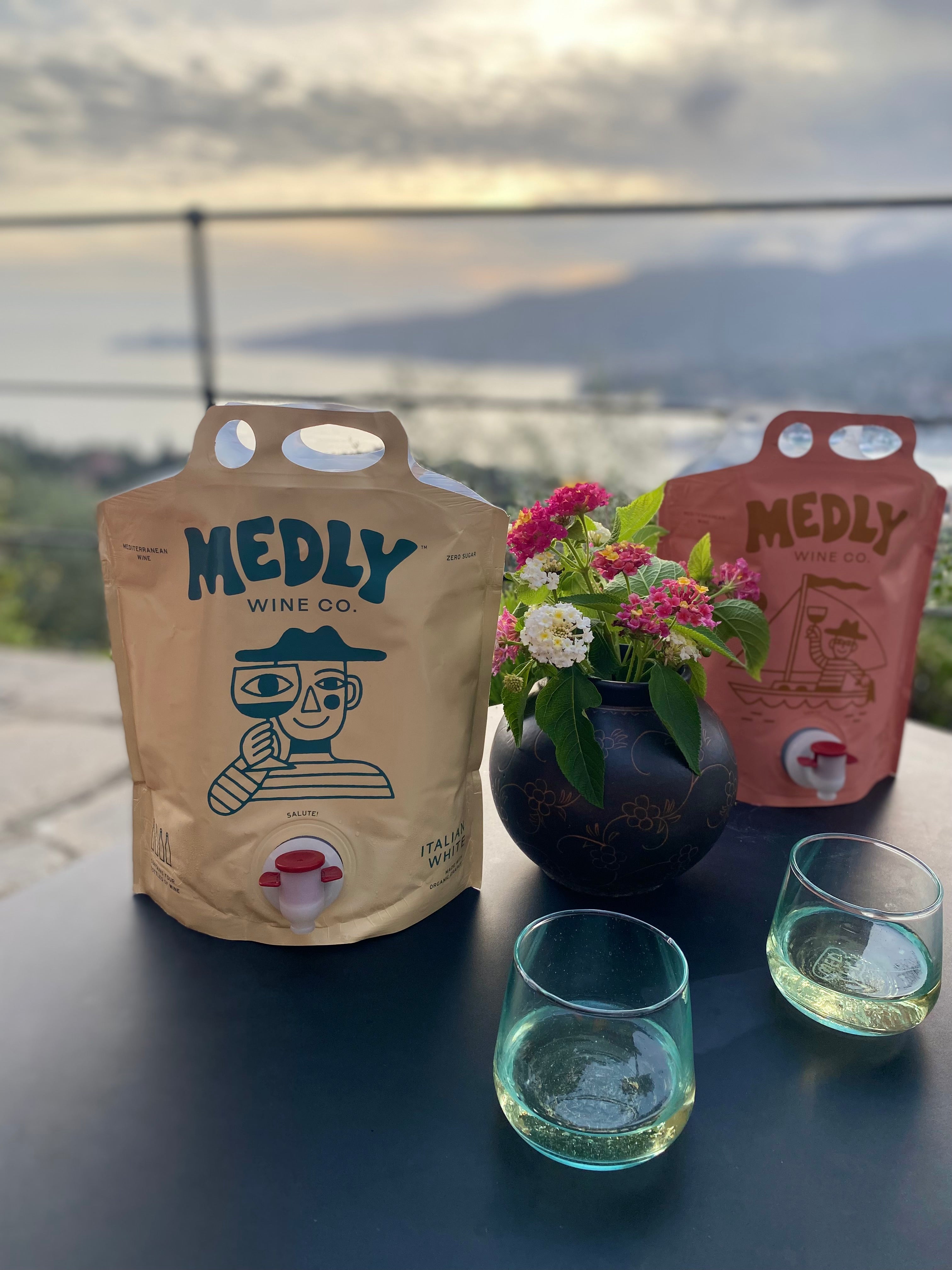
Every wine comes in our eco-conscious pouch instead of a bottle. The pouch chills quickly, travels easily, and keeps wine fresh for up to 45 days after opening.
For gluten sensitive drinkers, that means you can pour one glass at a time, at your own pace, without worrying about opening a new bottle every time you want a glass.
FAQs About Wine & Gluten
Is wine 100% gluten‑free?
Wine is naturally gluten‑free, and nearly all wines contain no detectable gluten.
Can wine trigger symptoms for people with celiac disease?
Rarely. Ultra‑sensitive individuals may prefer wines verified as gluten‑free.
Are red wines more gluten‑free than white wines?
No. Red, white, and rosé wines are equally gluten‑free by nature.
Do sulfites contain gluten?
No. Sulfites and gluten have no biochemical relationship.
Is Champagne gluten‑free?
Yes, unless flavored after production.
Are wine coolers or spritzers gluten‑free?
Most are not. Many contain malt or gluten‑based flavorings.
Gluten Free Wine - Simplified
Wine is inherently gluten‑free, and contamination risks are exceptionally low. Still, understanding how wine is made helps gluten‑sensitive drinkers feel confident and informed.
Medly wines are crafted from certified organic grapes with no gluten‑containing agents – a clean, trustworthy choice for any gluten‑free lifestyle.
Explore Medly’s full lineup of naturally gluten‑free wines for your next gathering, charcuterie night, or quiet evening at home, and pour a glass that fits both your body and your style.
To happiness and health!
Aaron